
Mined Diamonds
Explore the Beauty of Nature
Mined diamonds are natural gemstones formed deep within the earth over billions of years. Rare and enduring, each diamond is uniquely shaped by nature, making it a timeless choice for fine jewellery.
Mined diamonds are natural gemstones formed deep within the earth over billions of years. Rare and enduring, each diamond is uniquely shaped by nature, making it a timeless choice for fine jewellery.
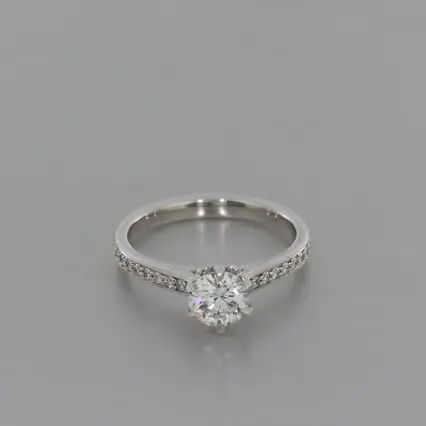
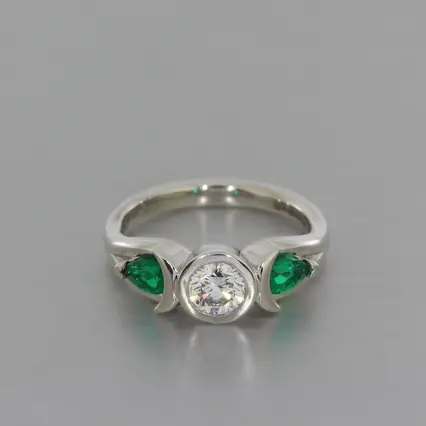
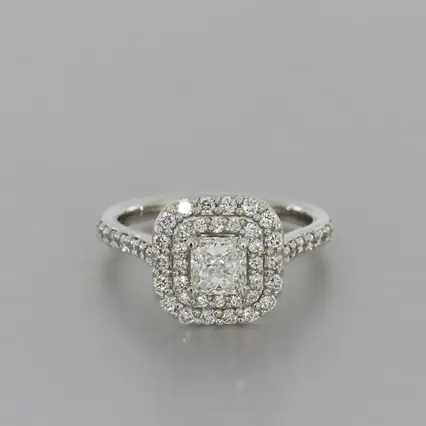
Are Mined Diamonds Right for You?
-
Aesthetics: They are celebrated for their natural brilliance and fire, with each stone offering its own combination of colour, clarity, cut and character. We carefully select diamonds based on their individual qualities, with particular attention to cut and light performance, to help you find a stone that works beautifully within your design.
-
Cost: Mined diamonds are generally priced higher than lab-grown diamonds, although prices vary considerably depending on carat weight, cut, colour and clarity. With a wide range of stones available, we can help you explore options that suit your preferred design and price point.
-
Durability: Diamond is the hardest naturally occurring mineral, making it highly resistant to scratching and well suited to everyday jewellery. As with any gemstone, however, diamonds can still chip or be damaged by a significant impact, so appropriate care is important.
-
Ethical Sourcing: We understand that the origins of a diamond can be an important consideration. Our mined diamonds are sourced through established suppliers and comply with the requirements of the Kimberley Process, an international certification scheme designed to prevent conflict diamonds from entering the legitimate rough-diamond trade. If provenance and additional sourcing information are particularly important to you, we can discuss the options available for your chosen stone.
-
Design Versatility: They can be incorporated into a wide variety of jewellery designs, from classic solitaires and delicate bands to more distinctive bespoke pieces. Their range of shapes, sizes and qualities allows us to select stones that complement the design you have in mind.
Origin
Mined diamonds begin their journey deep within the Earth’s mantle, forming under immense heat and pressure over billions of years. Volcanic activity brings them closer to the surface, where they can be found within ancient rock formations known as kimberlite pipes. Over time, some diamonds are released from these rocks and carried by rivers, forming alluvial deposits.
Diamonds have been valued for thousands of years, with India recognised as the earliest known source. Significant discoveries in Brazil during the 18th century and South Africa in the late 19th century transformed the scale of the diamond industry and established many of the major sources we know today.
Their rarity and natural beauty have given diamonds enduring significance in jewellery, with their association with engagement rings becoming particularly strong during the 20th century. Today, each mined diamond carries a unique geological history, shaped over billions of years before it ever becomes part of a piece of jewellery.
Understanding the 4Cs
The 4Cs, Cut, Colour, Clarity and Carat, are the internationally recognised standards used to describe a diamond. Together, they help you understand the characteristics that influence a diamond’s appearance, rarity and value.
Each C tells you something different. Cut affects how the diamond interacts with light, Colour describes how much colour is present, Clarity looks at its natural internal and surface characteristics, and Carat refers to its weight.
Understanding the 4Cs gives you a useful starting point when comparing diamonds, while helping you focus on the qualities that matter most to you and your design.

Cut
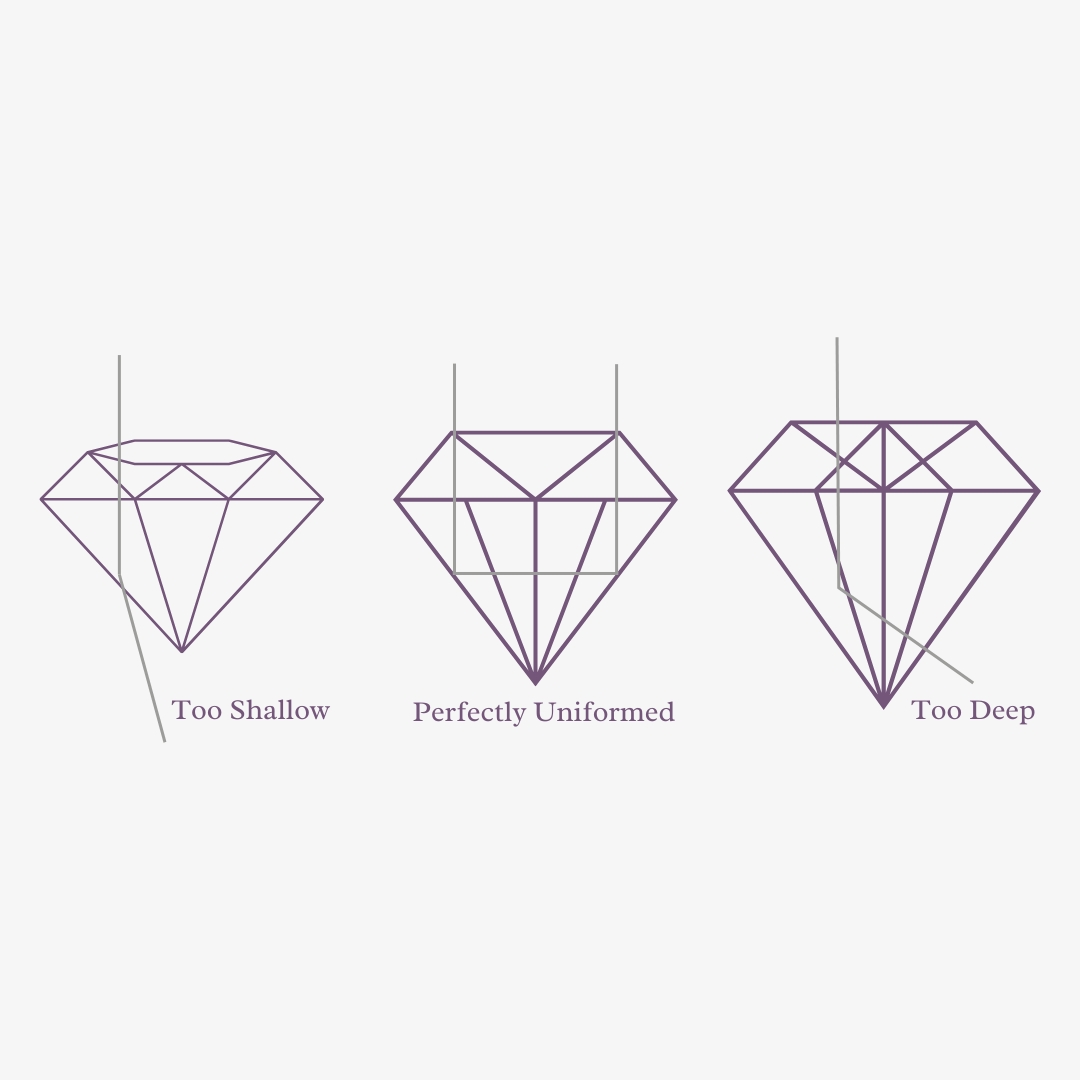
The cut has a particularly strong influence on how a diamond looks and performs. It refers to the precision of the diamond’s proportions, angles and facets, rather than its shape. A well-cut diamond is designed to interact beautifully with light, creating brightness, flashes of colour and sparkle.
It’s worth remembering that shape and cut are different. Shape describes the outline of a diamond, such as round, oval, pear or emerald, while cut describes how precisely the diamond has been crafted and how effectively it interacts with light.
When selecting a diamond for a bespoke piece, we pay close attention to its cut and overall light performance, helping you choose a stone that looks beautiful within your design.
Why It Matters
Cut:
Cut refers to the proportions, angles and arrangement of a diamond’s facets. A well-cut diamond is carefully proportioned to allow light to enter, reflect within the stone and return through the top, creating brightness, fire and scintillation. The quality of the cut has a significant influence on how lively and bright a diamond appears.
Polish:
Polish describes the quality and smoothness of a diamond’s surface after it has been cut. A high-quality polish helps ensure the facets have a clean, refined finish, allowing the diamond to perform as intended. Under magnification, polishing marks can be visible on stones with lower polish grades.
Symmetry:
Symmetry refers to how precisely the diamond’s facets are aligned and positioned in relation to one another. Good symmetry helps light interact consistently across the stone, contributing to a balanced and visually harmonious appearance. Precise facet alignment is particularly important when assessing diamonds where light performance is a key consideration.
Light Performance
Light performance describes the way a diamond interacts with light and plays an important role in how bright and lively it appears. It is commonly considered through three key elements: brilliance, fire and scintillation.
Brilliance:
Brilliance refers to the white light a diamond reflects back to the viewer. A well-cut diamond is carefully proportioned to allow light to enter and return through the crown, creating areas of brightness across the stone. The balance of light and contrast contributes to the diamond’s overall appearance and visual character.
Fire:
Fire describes the flashes of spectral colour that can be seen when light is dispersed through the diamond. These flashes can appear as subtle hints of different colours, particularly as the diamond moves or is viewed under changing light.
Scintillation:
Scintillation is the sparkle you see as a diamond, the light or your viewpoint moves. It creates the flashes of light and contrast that make a diamond look lively and animated.
Colour
Diamond colour refers to the presence or absence of colour within a stone and is an important part of its overall appearance. Diamonds are graded from colourless through to light tints, with less colour generally creating a brighter, more neutral appearance.
When selecting a diamond, colour is often a matter of personal preference, design style and price point. Some clients prefer a colourless or near-colourless diamond for a crisp, bright look, while others may prefer a slightly warmer tone as part of the character of the stone. Colour can also interact with the diamond’s cut and the setting it is placed in, so we consider how all of these elements work together when selecting a stone.
Illustration for guidance only; actual appearance may vary.
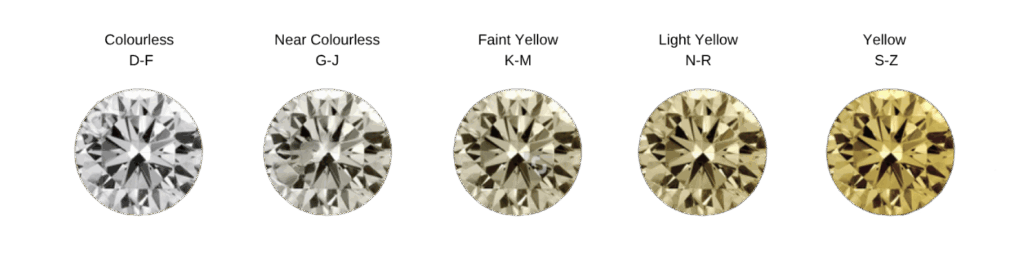
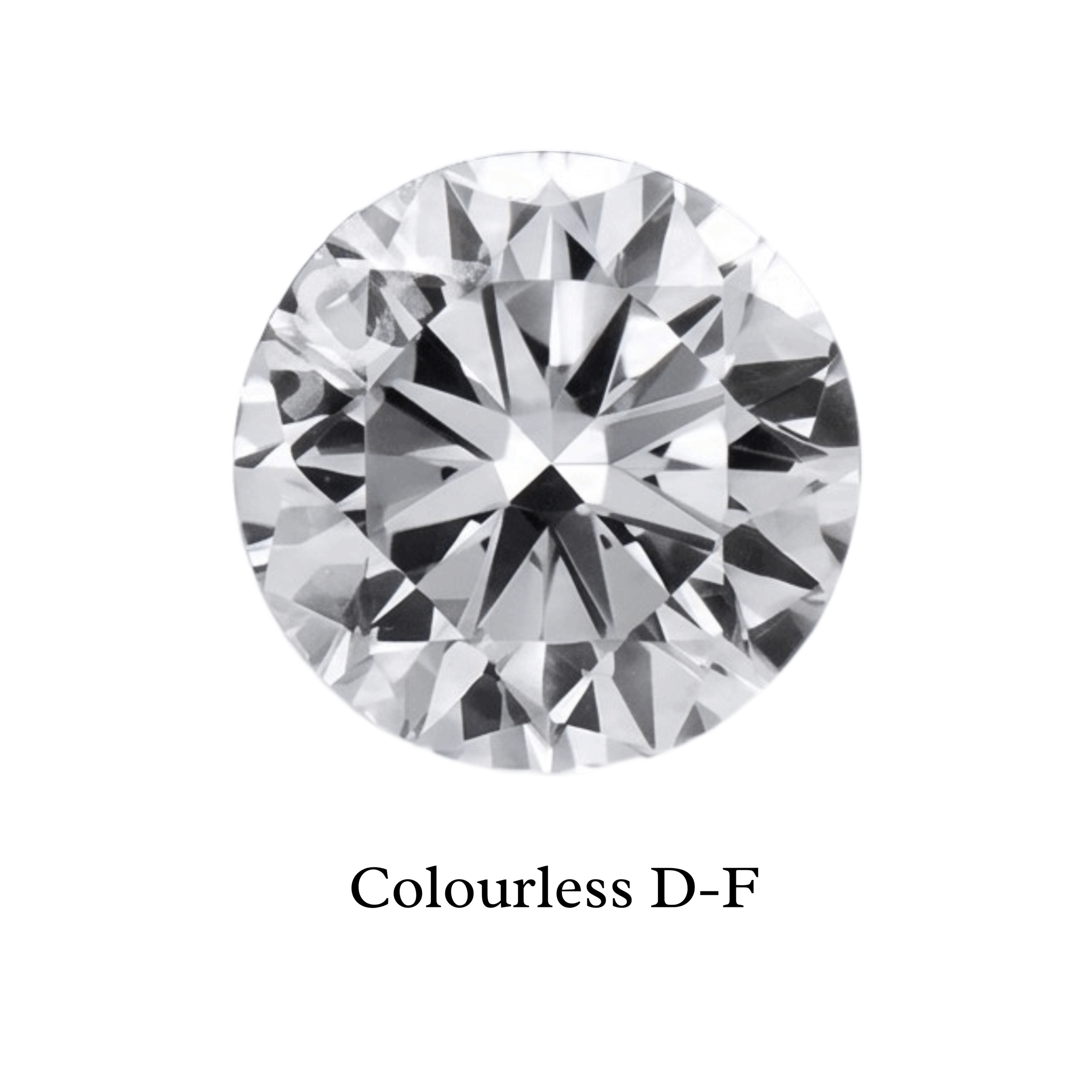
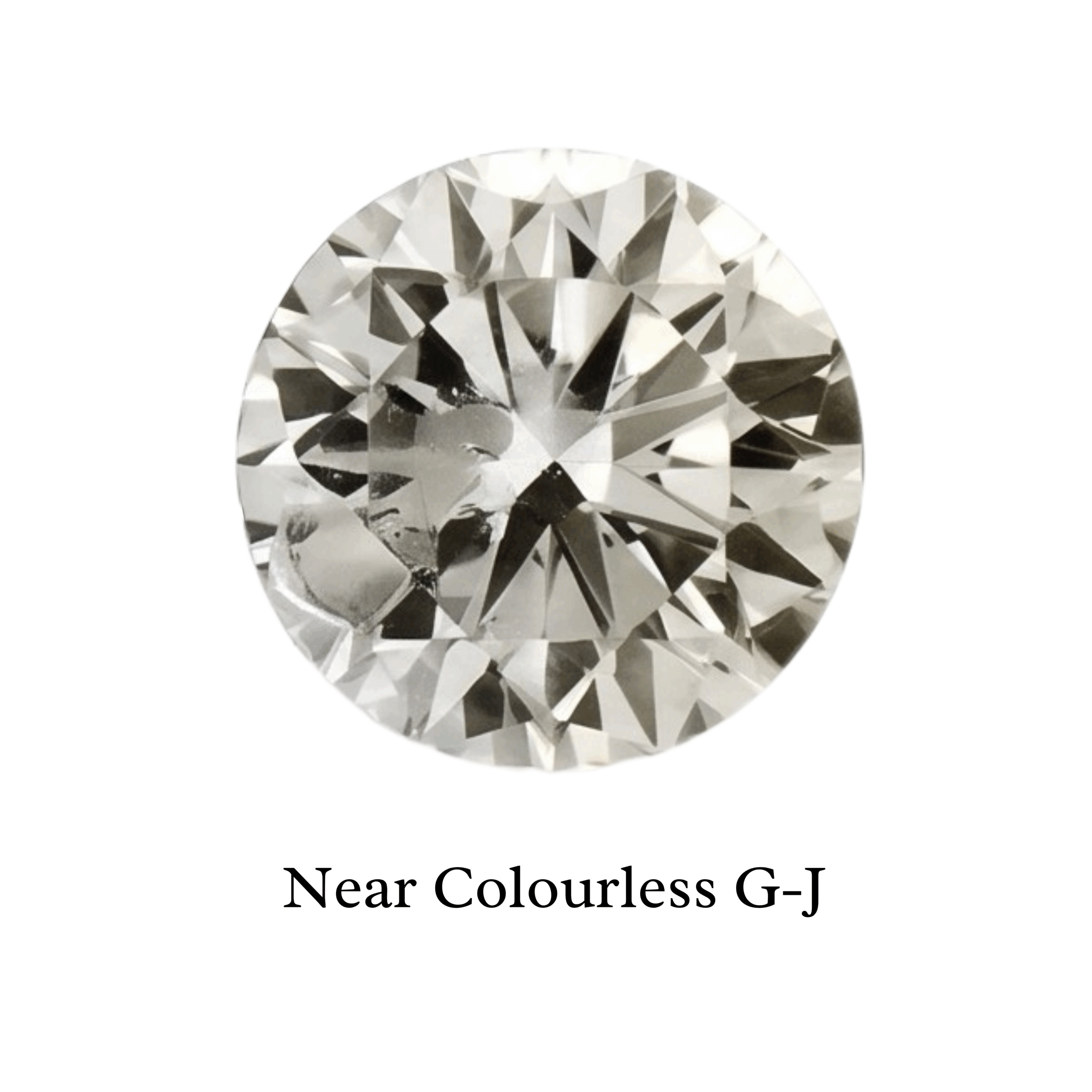
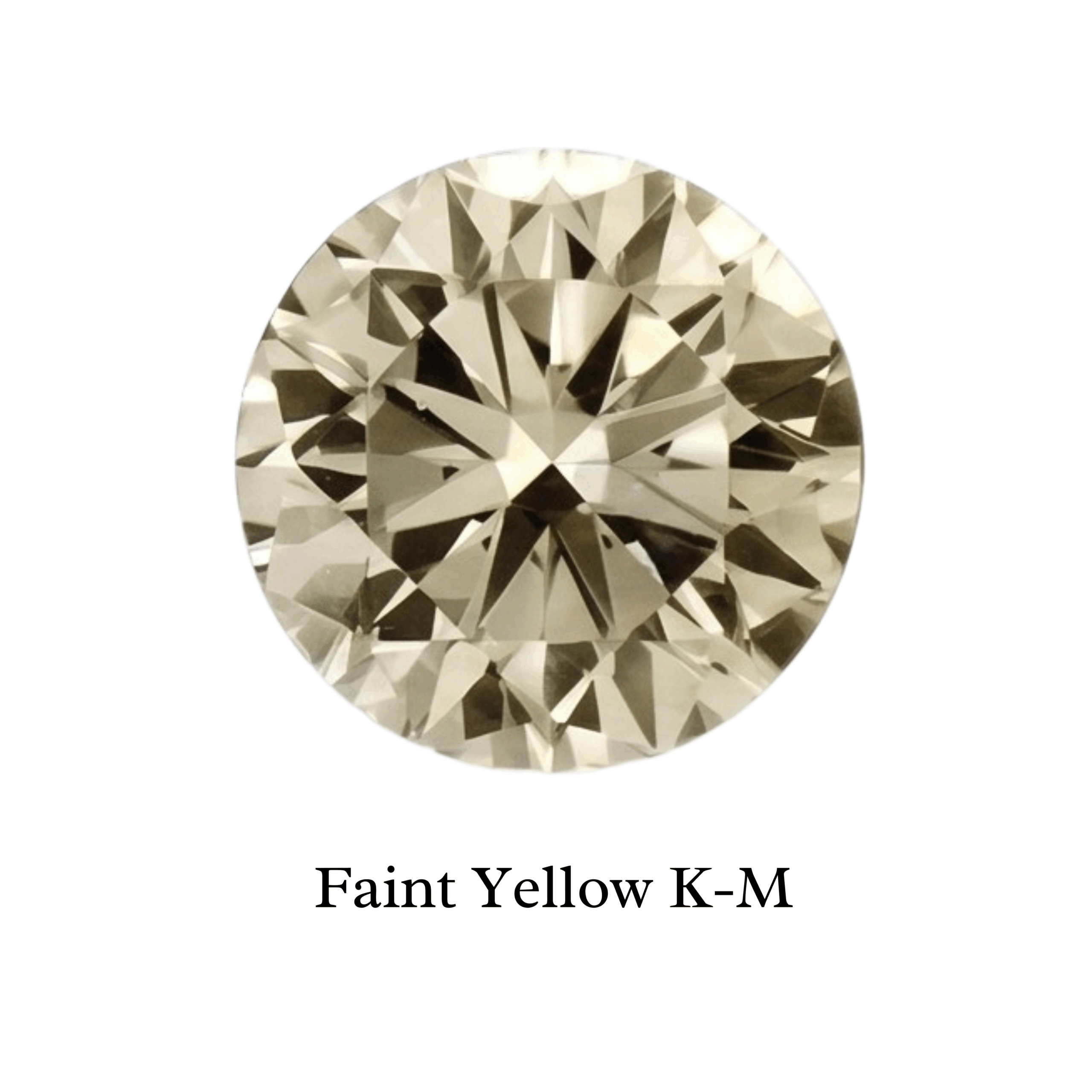
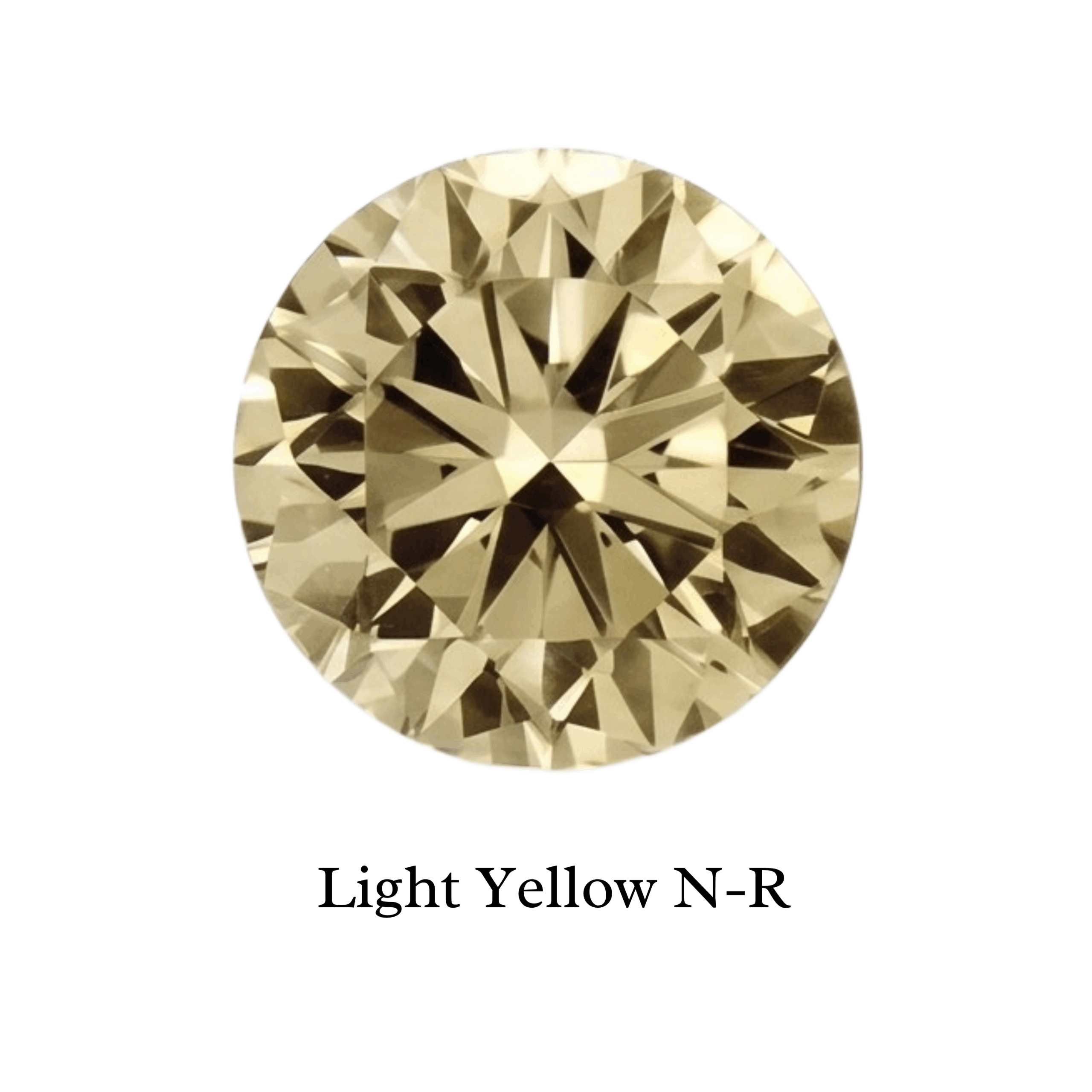
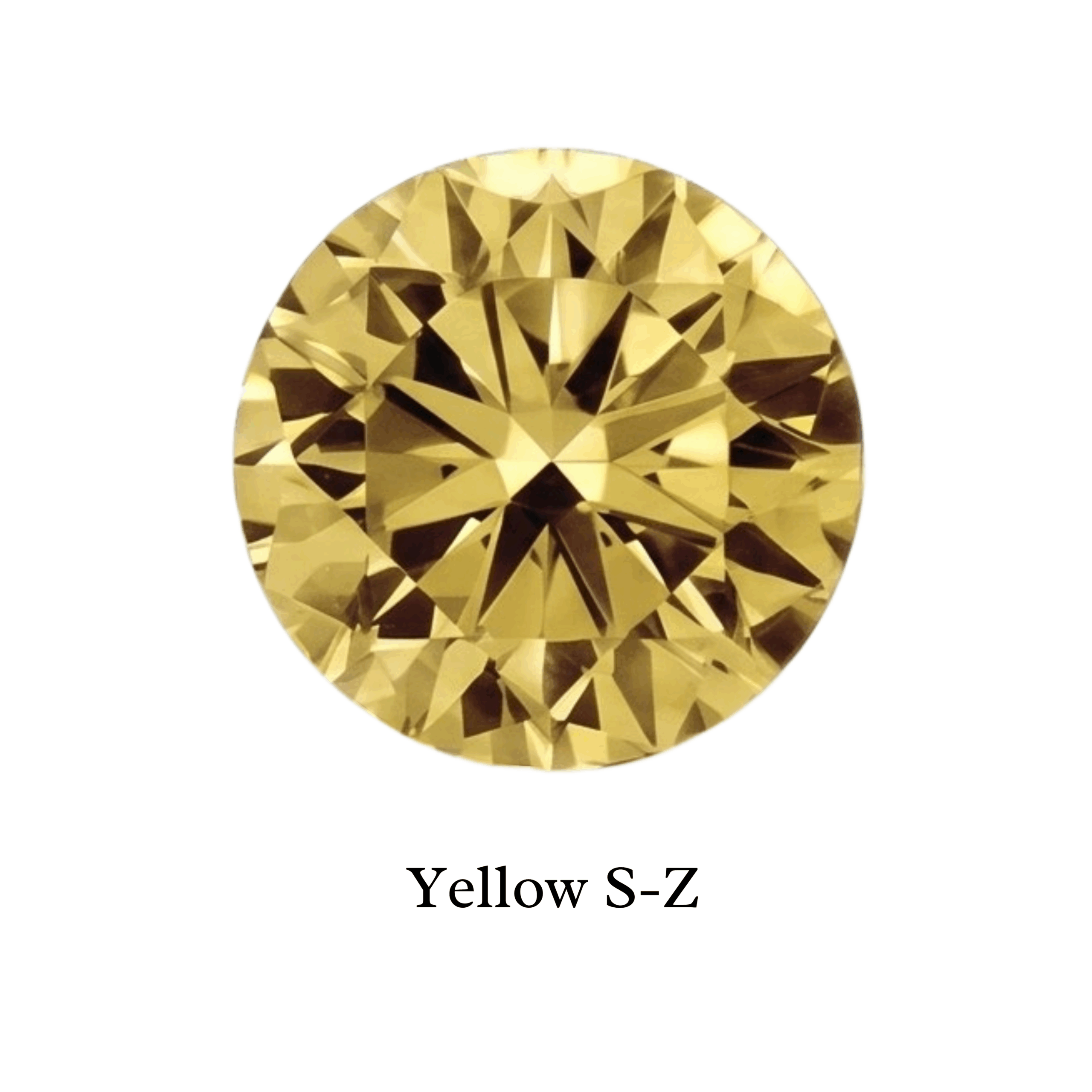
The most widely recognised diamond colour grading system, used by leading gemmological laboratories including GIA, grades diamonds from D (colourless) to Z (light yellow or brown). The scale measures the degree of colour present within a diamond, with less colour corresponding to a higher grade.
Colourless Diamonds (D-F)
Diamonds graded D to F are considered colourless, showing little to no detectable colour when viewed face-up. They are prized for their crisp, neutral appearance and can appear particularly bright when well cut
Near-Colourless Diamonds (G-J)
Diamonds graded G to J contain slight traces of colour, which can be difficult to detect once the diamond is set, particularly when viewed on its own. The appearance can vary depending on the diamond’s cut, proportions, size and setting, with many stones in this range still appearing bright and white to the eye. In some settings, particularly yellow or rose gold, a slight warmth may be less noticeable
Faint to Light Colour (K-Z)
Diamonds graded K to Z show increasingly visible colour, typically ranging from a subtle warmth through to light yellow or brown tones. These grades can be a good choice for designs where a warmer appearance is part of the desired aesthetic, particularly when paired with complementary metal colours.
Clarity
Clarity refers to the natural inclusions, which are internal characteristics, and blemishes, which are surface features, found within a diamond. These form as the diamond develops deep within the Earth and are a natural part of its formation. Most diamonds contain some degree of these characteristics, and clarity is graded under 10x magnification, although some may also be visible to the naked eye depending on their size, position and nature.
A higher clarity grade generally means fewer or less noticeable characteristics. However, two diamonds with the same clarity grade can look quite different. For this reason, we assess each stone individually, looking at how its characteristics affect its appearance, rather than relying on the clarity grade alone.
Illustration for guidance only; actual appearance may vary.
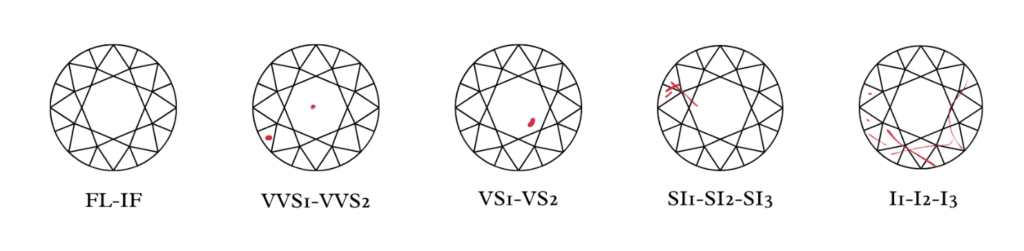
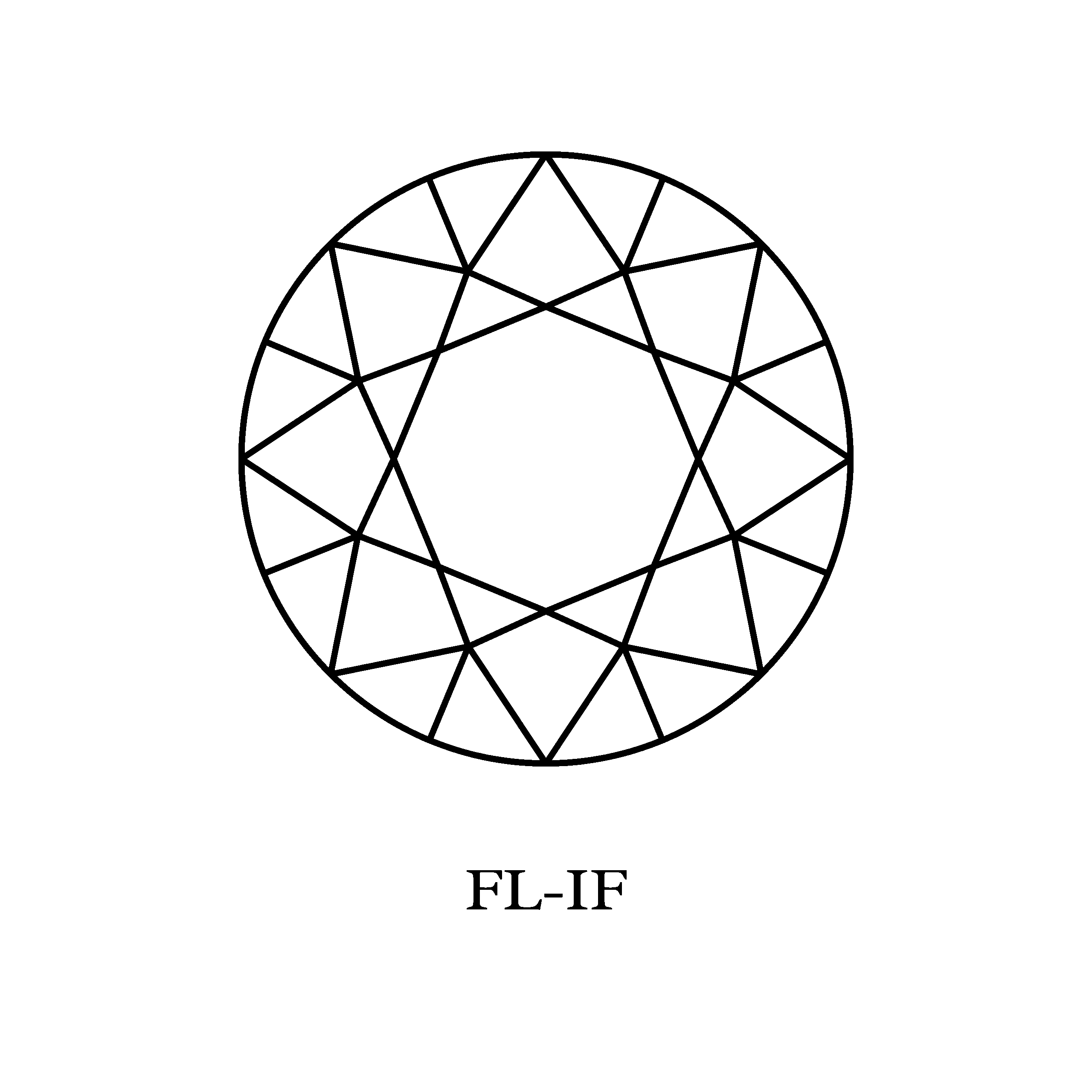




L & IF – Flawless & Internally Flawless:
At the top of the clarity scale, Flawless diamonds have no inclusions or blemishes visible under 10x magnification, while Internally Flawless diamonds have no internal inclusions but may have very minor surface characteristics. Both are exceptionally rare.
Very, Very Slightly Included (VVS1 and VVS2):
With extremely small inclusions that are very difficult to detect under 10x magnification, VVS diamonds offer exceptional clarity and are typically only identifiable by a trained gemmologist.
Very Slightly Included (VS1 and VS2):
Minor inclusions are present but are generally difficult to see without magnification. VS clarity is widely used in fine jewellery and can offer an excellent balance between clarity and appearance.
Slightly Included (SI1 and SI2):
At this level, inclusions become more noticeable under magnification and may be visible to the naked eye depending on their size, position and nature. Many SI diamonds can still appear clean and attractive when viewed face-up.
Included (I1, I2, I3):
Here, inclusions are generally visible to the naked eye and may have a greater effect on the diamond’s overall appearance. These grades are less commonly selected for fine jewellery.
Carat
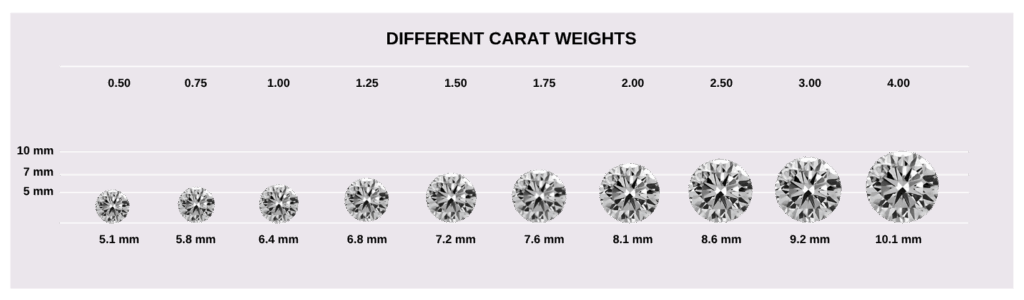
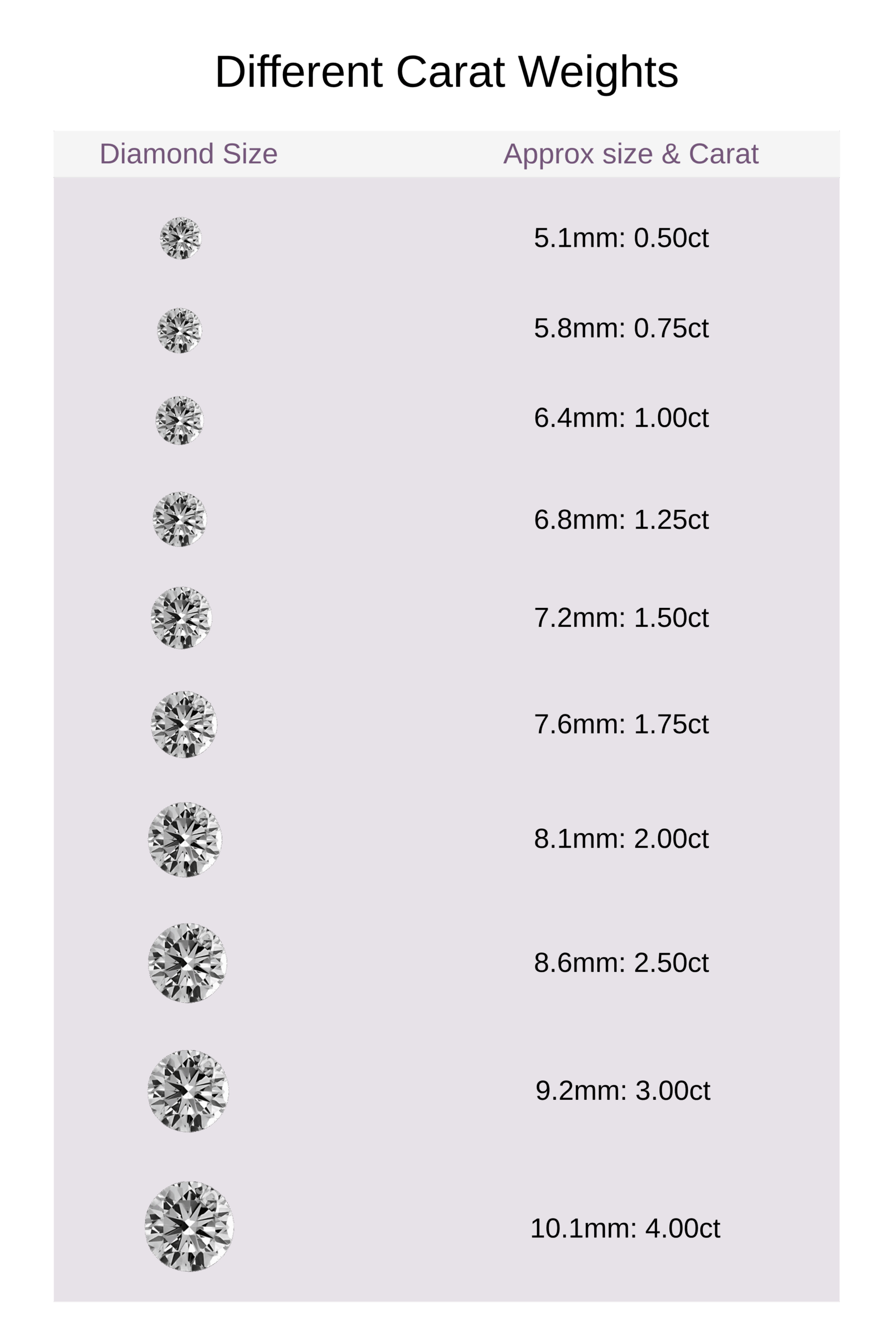
Carat refers to the weight of a diamond, with one carat equal to 0.2 grams. It is important to remember that carat weight is not the same as a diamond’s physical size. Two diamonds with the same carat weight can have different measurements and look noticeably different once set.
As carat weight increases, diamonds generally become rarer, which is reflected in their value. However, weight alone does not determine how large or impressive a diamond appears. Cut, proportions, and shape all influence its face-up size and how effectively it interacts with light. For example, some diamond shapes can appear larger for their carat weight, while a well-cut stone can look particularly bright and lively.
When selecting a carat weight, we consider how the stone’s dimensions, proportions and shape will work within the overall design. This helps us find the right balance between the size of the diamond, its appearance and the proportions of your finished piece.
Illustration for guidance only; actual appearance may vary.
What is Diamond Fluorescence?
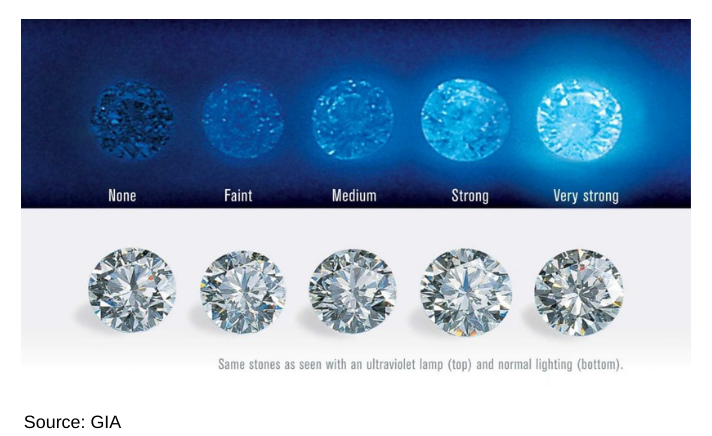
Diamond fluorescence is essentially how ultraviolet (UV) light affects a diamond. Similar to how whites appear brighter or teeth seem to glow under UV light, diamonds emit visible light when exposed to UV rays. On a Diamond Grading Report, fluorescence indicates the strength of this reaction to UV light, an essential component of daylight.
Inside a Diamond Grading Report
Most mined diamonds from around 0.30 carats and above are typically accompanied by a grading report from a recognised gemmological laboratory, such as GIA, IGI or HRD. The report provides an independent record of the diamond’s key characteristics and is a useful reference when selecting and comparing individual stones.
A diamond grading report records details such as the carat weight, colour, clarity, measurements and proportions, along with information about the cut and other identifying characteristics where applicable.
Below is an example of a diamond grading report, so you can see the information included and how the details of an individual stone are presented.
Certification number & Verification
Each report is issued with a unique report number, which can be checked through the issuing laboratory’s official database. This allows the report details to be verified and linked to the specific diamond.
Key Grading Information
A grading report typically records the diamond’s shape, measurements, carat weight, colour and clarity. Colour is graded from D (colourless) to Z (light yellow or brown), while clarity ranges from Flawless to Included. Together, these provide a standardised description of the diamond’s key characteristics.
Cut, Polish & Symmetry
For round brilliant diamonds, the report also includes a cut grade, along with polish and symmetry grades. These provide information about the precision of the diamond’s proportions, facet arrangement and finish, all of which contribute to its overall appearance and light performance.
Additional Characteristics
Where applicable, the report records fluorescence and may include additional comments about the diamond’s individual characteristics or identifying features.
Diamond Plot
A plotted diagram may be included to show the position of internal inclusions and surface characteristics. This creates a visual reference that can help identify the individual diamond alongside its grading details.
How much does it cost?
The cost of bespoke jewellery depends on the design, materials and gemstones you choose. We’ll work closely with you to create something that reflects your vision while staying within your budget, with clear and transparent pricing throughout the process. If you already have an idea in mind, get in touch for a tailored quote, or book a design session to start bringing your ideas to life.
Knowledge Hub
At Durham Rose, we believe in empowering our clients with the knowledge they need to feel confident throughout their bespoke journey. While our expert designers are always available to answer questions during consultations and throughout the process, we’ve also created a wealth of resources to help you understand every element of your jewellery and make informed decisions with confidence.
Jewellery Services
As a bespoke company, we offer a complete service that supports every stage, providing a seamless and personal experience designed entirely around you. From initial design through to creation and aftercare, every detail is thoughtfully considered to ensure your piece is crafted with complete care.
Explore Our Blog Posts
Curious about the world of bespoke jewellery? Discover the stories behind the process, gain insight into every stage of creating a unique piece, and find answers to your questions along the way. From designing the perfect engagement ring to understanding gemstones and precious metals, our blog is your go-to guide for all things bespoke jewellery
How can I ensure the diamond is ethically sourced?
To ensure your diamond is ethically sourced, we adhere to the Kimberley Process, an international initiative designed to prevent the trade of conflict diamonds. This process ensures that diamonds are sourced from regions free from violence and human rights abuses. We partner with suppliers who comply with these standards, guaranteeing that our diamonds are responsibly and ethically mined.
Can I reuse my old diamond in the new design?
Yes! We’d be delighted to incorporate your existing diamond into your new bespoke design, giving it a fresh and meaningful life. We will assess the stone to ensure it’s suitable for the new setting and make recommendations based on its unique proportions. Please note that setting client-provided diamonds is done at your own risk, as we cannot guarantee their condition or durability, but we will handle them with the utmost care and expertise.