
Mined Diamonds
Explore the Beauty of Nature
Mined diamonds are natural gemstones formed over billions of years. Rare, durable and uniquely shaped by nature, they are cherished for their timeless beauty and enduring place in jewellery.
Mined diamonds are natural gemstones formed over billions of years. Rare, durable and uniquely shaped by nature, they are cherished for their timeless beauty and enduring place in jewellery.
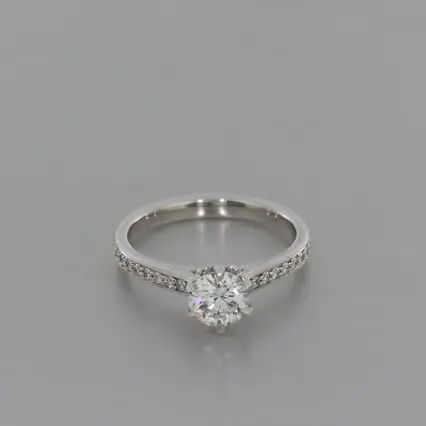
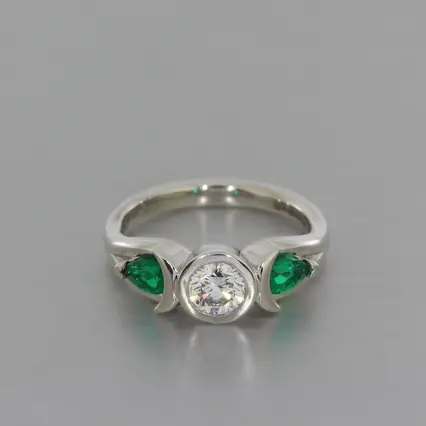
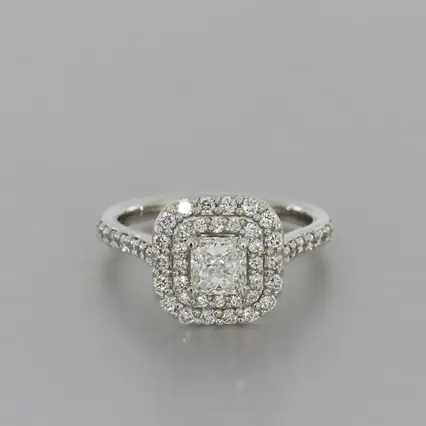
Are Mined Diamonds Right for You?
-
Aesthetics: Mined diamonds are celebrated for their natural brilliance, fire, and sparkle, making them a popular choice. Each diamond is unique, with characteristics like clarity, cut, and colour that contribute to its visual appeal. We make it our mission to help clients carefully select diamonds that enhance their bespoke pieces. We also emphasise the importance of an excellent cut to maximise light performance.
-
Cost: Mined diamonds are typically priced higher than some alternative gemstones due to the natural formation process, extraction, and certification requirements. The overall cost is influenced by factors such as carat weight, clarity, cut, and colour. A wide range of options are available, and selections can be tailored to suit different budgets, design preferences, and priorities.
-
Durability: Known for being the hardest natural material, mined diamonds are exceptionally durable and perfect for everyday wear. Their resistance to scratches and damage ensures that your bespoke jewellery, whether it’s an engagement ring, wedding band, or heirloom piece, will remain as stunning as the day you first wear it. This durability makes them an ideal choice for clients looking for long-lasting, timeless designs.
-
Ethical Sourcing: At Durham Rose, we understand the importance of ethical sourcing. We follow practises to ensure that all our mined diamonds adhere to strict ethical standards, such as the Kimberley Process, which guarantees that the diamonds are sourced responsibly. We are committed to offering diamonds that you can wear with pride, knowing they align with your values.
-
Design Versatility: One of the key advantages of mined diamonds is their versatility in design. Whether you envision a classic solitaire engagement ring or a unique, intricate piece, mined diamonds can enhance any design. We specialise in working with clients to create bespoke jewellery that reflects your individual style and vision.
Origin
Mined diamonds are formed deep within the Earth’s mantle under intense pressure and heat. They are transported to the surface through volcanic eruptions, creating deposits in igneous rock formations known as Kimberlite, or in alluvial deposits like riverbeds. The earliest diamond trade began in India around the 4th century BC, and by the 1700s, Brazil became a key source. In the 1800s, large diamond reserves were discovered in South Africa, greatly expanding diamond availability beyond royalty and nobility.
Diamonds gained lasting popularity as the symbol of engagement in 1947, following DeBeers’ iconic “Diamonds are Forever” campaign. Ethical concerns in the modern diamond industry have led to initiatives like the Kimberley Process, which ensures that diamonds are conflict-free and responsibly sourced.
Today, diamonds remain highly valued for their beauty, durability, and symbolism, making them a sought-after choice for bespoke engagement rings and other fine jewellery.
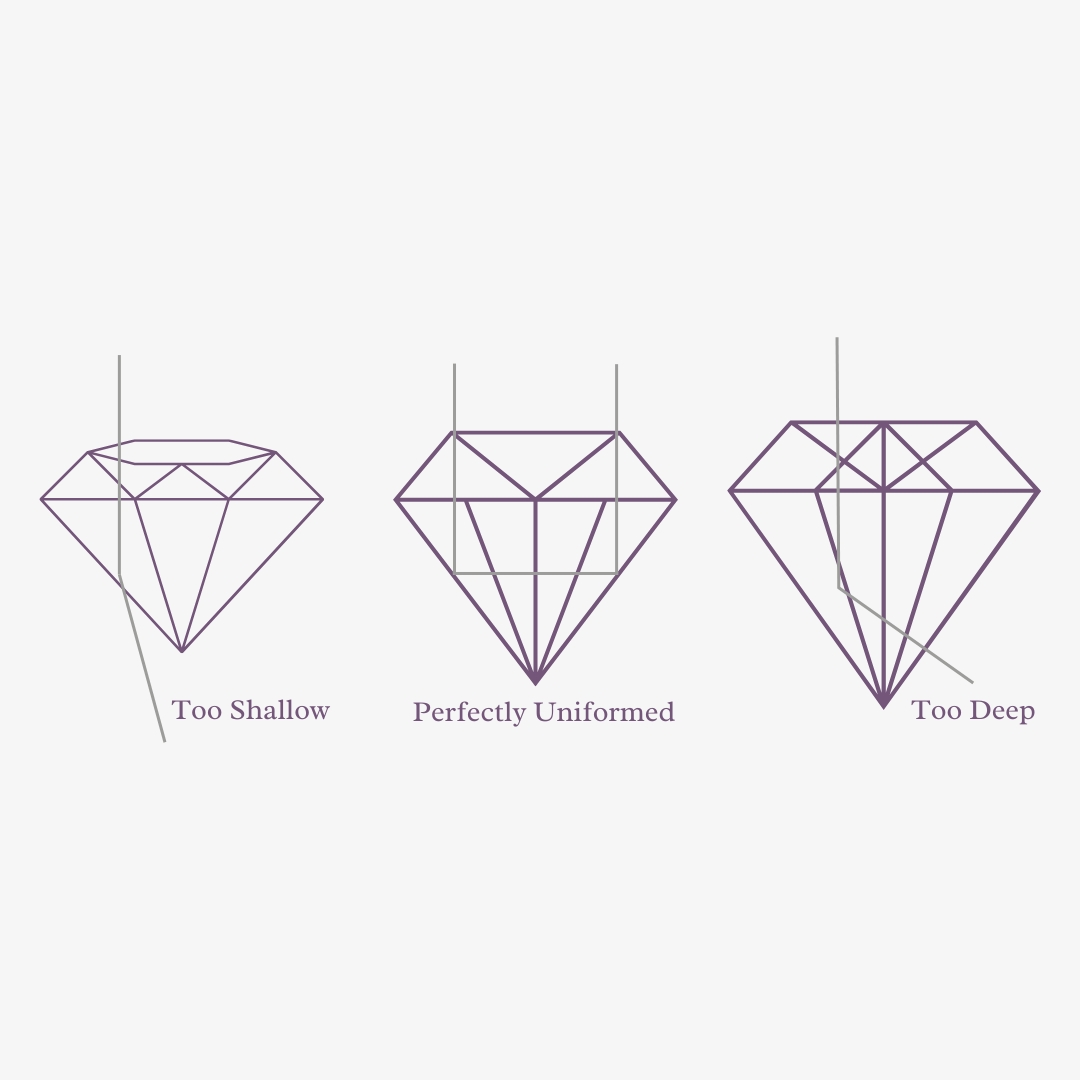
The Craft Behind a Diamond
Cut:
Cut refers to how well a diamond’s facets are proportioned, angled, and arranged to interact with light. When a diamond is cut to optimal standards, light enters the stone, reflects internally, and returns to the viewer’s eye, creating brightness, fire, and sparkle. A well-executed cut achieves a careful balance between proportions and angles, maximising overall light performance and visual appeal.
Polish:
The polish evaluates the smoothness and finish of the diamond’s surface following the cutting process. A well-polished diamond allows light to pass cleanly through the stone without interference. Surface imperfections or marks can disrupt light performance and reduce the diamond’s overall brilliance.
Symmetry :
Symmetry assesses how precisely the diamond’s facets are aligned and positioned in relation to one another. A diamond with excellent symmetry reflects light evenly across its surface, contributing to a balanced and consistent sparkle. Even small variations in symmetry can influence how light travels through the stone and may affect its overall appearance.
Light Performance
Light performance describes how a diamond interacts with light and is a key factor in how its beauty is perceived. It is commonly explained through three key elements: brilliance, fire, and scintillation.
Brilliance:
Brilliance refers to the white light reflected from a diamond, contributing to its overall brightness and visual presence. A well-cut diamond is designed to return light efficiently through its facets, creating areas of brightness when viewed face-up. The balance between light return and contrast helps define the diamond’s depth and visual character.
Fire:
Fire describes the dispersion of white light into spectral colours. These subtle flashes of colour are most visible when the diamond moves under light, creating shifting tones across the stone. The amount of fire seen is influenced by how the diamond has been cut and how its facets interact with light.
Scintillation:
Scintillation refers to the pattern of light and dark flashes seen as a diamond moves. It is created by reflections from the facets at different angles and contributes to the dynamic sparkle of the stone. A well-proportioned diamond will display a balanced, even pattern of scintillation, with light returning consistently as it moves.
What are the 4C’s?
The 4Cs, Cut, Colour, Clarity, and Carat, are the global standard used to describe and compare diamonds. Together, they give a clear picture of a diamond’s quality and what makes each stone unique.
When choosing a diamond, the 4Cs provide a simple way to understand what affects its appearance, from sparkle and brightness to size and overall presence. Each “C” plays its own role, and together they shape how a diamond looks and feels once it’s set.
Learning the 4Cs helps you compare diamonds with confidence and focus on what matters most to you when selecting the right stone.

Did you know?
The most important “C’ is the ‘Cut‘
The cut is a fundamental aspect of the 4C’s that significantly influences a diamond’s overall aesthetics and performance. The term “cut” encompasses not only the shape, such as round, princess, or emerald, but also the precision with which the diamond has been faceted and polished. A masterfully cut diamond optimises light return, creating exceptional brilliance, fire, and scintillation. Understanding the nuances of the cut allows you to appreciate how it enhances the diamond’s inherent beauty and value. In the context of bespoke jewellery, a finely cut mined diamond serves as the foundation for your one-of-a-kind piece, making it an essential consideration in your selection process.
Colour
Diamond colour refers to the presence or absence of colour within a stone and is an important factor in its overall appearance. Diamonds are graded on a scale from colourless through to light tints, with those showing less colour generally appearing brighter and more neutral to the eye.
When selecting a diamond, colour is often guided by personal preference, design style, and budget. Some clients prefer a near-colourless or colourless appearance for a crisp, bright look, while others may be open to slightly warmer tones depending on the character they want from the stone. Understanding where your preference sits on this scale helps narrow down suitable options. Colour also interacts with other elements such as cut and setting style, which can influence how the diamond appears once set in jewellery.
Illustration for guidance only; actual appearance may vary.
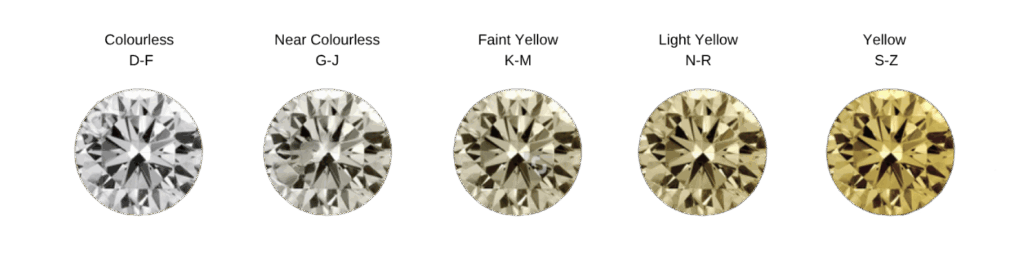
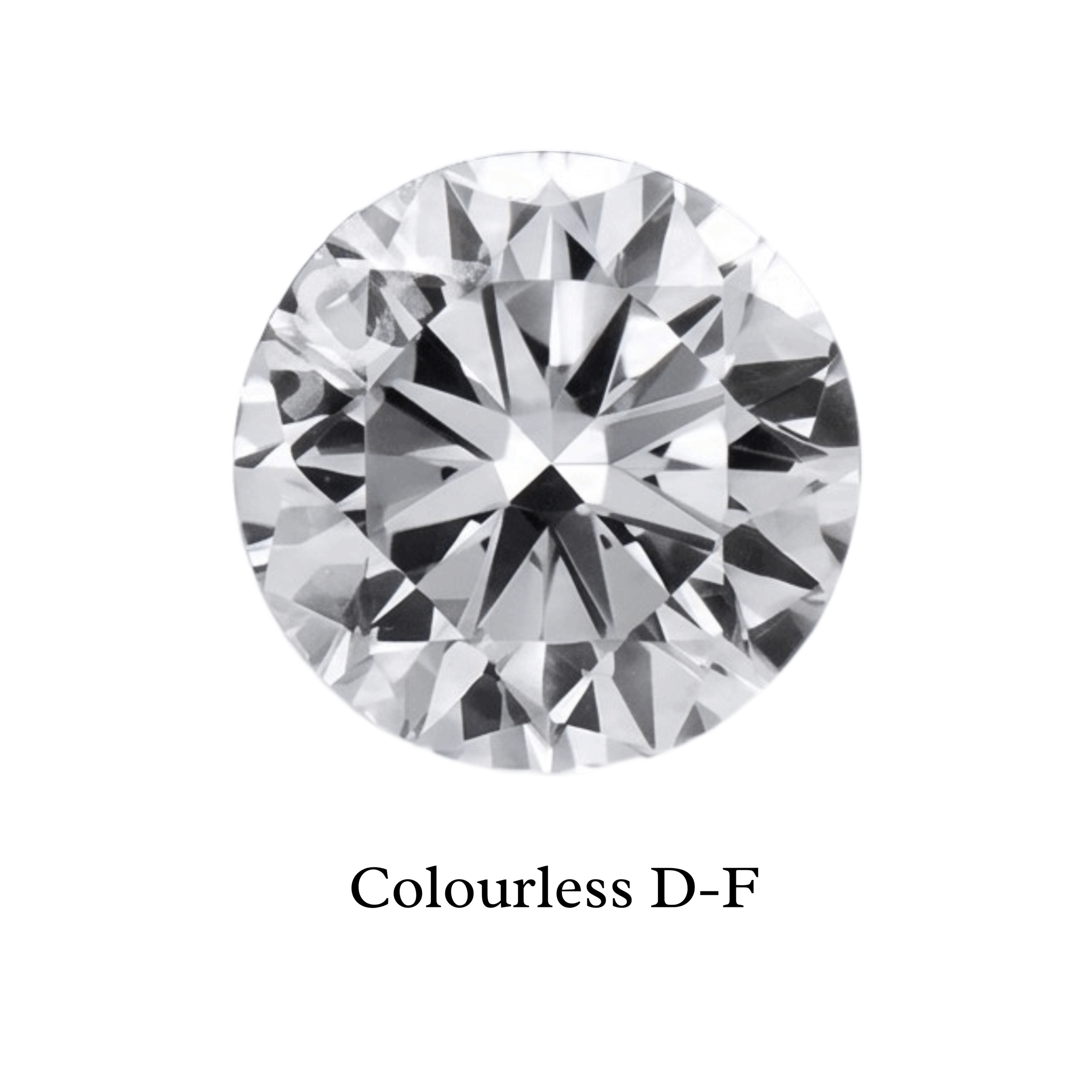
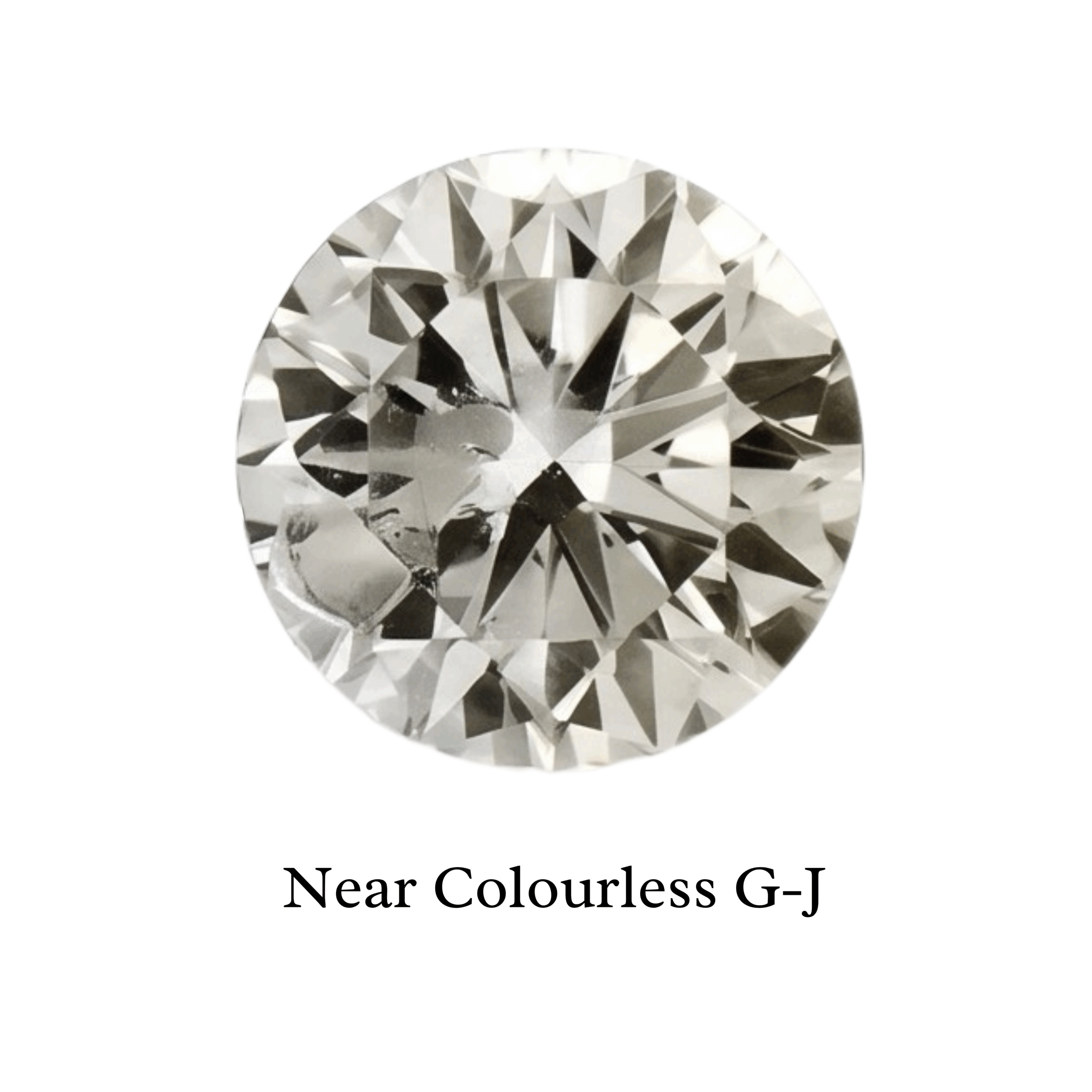
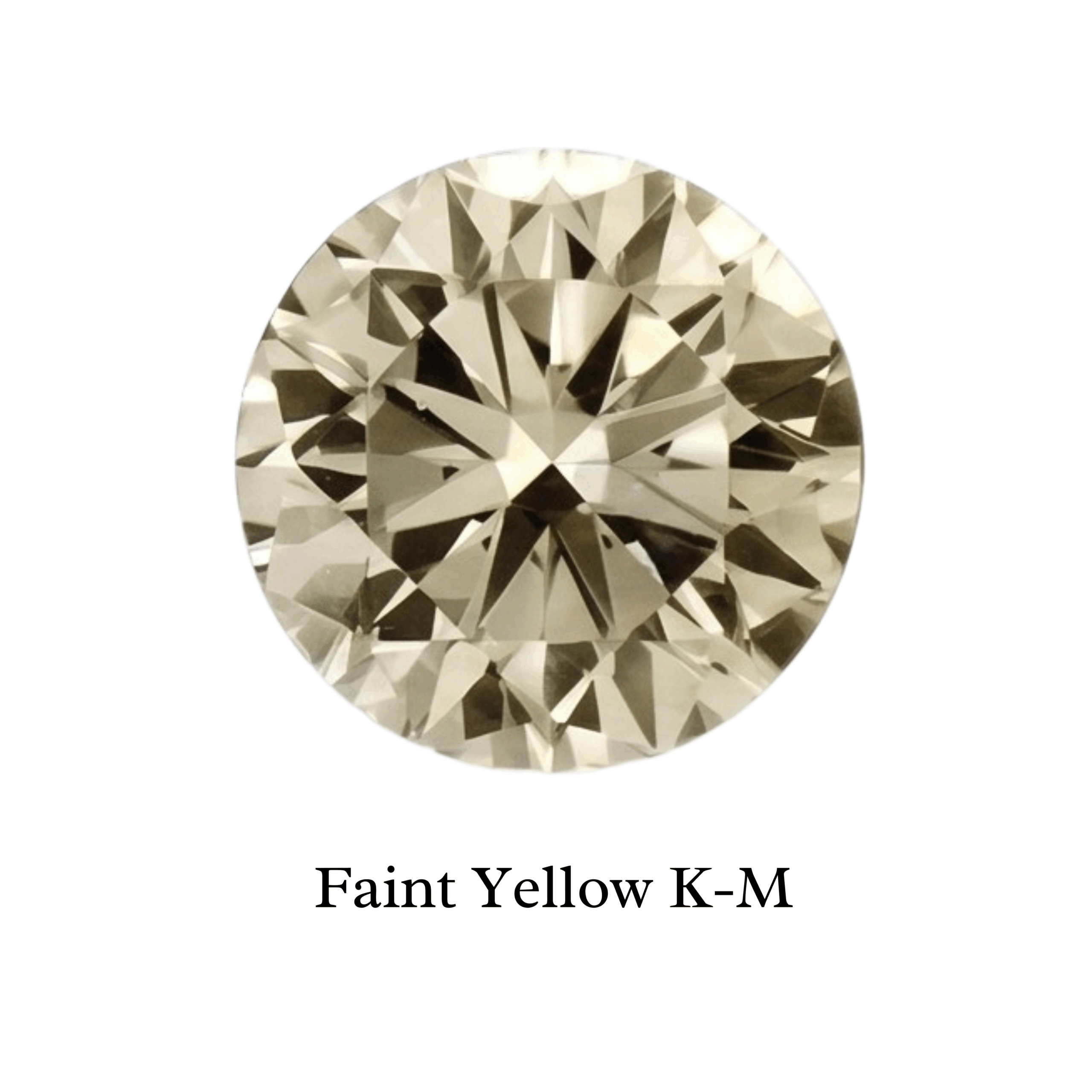
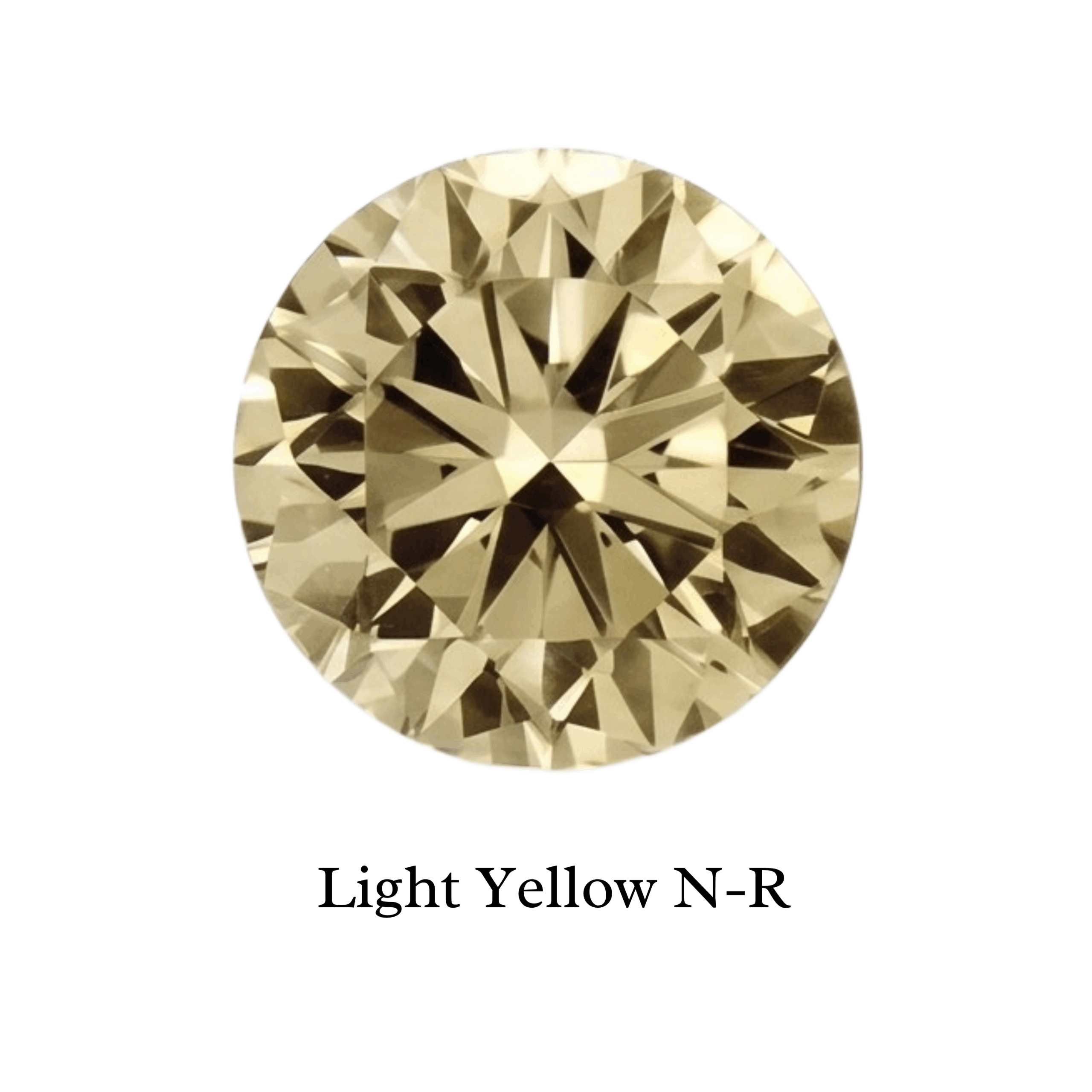
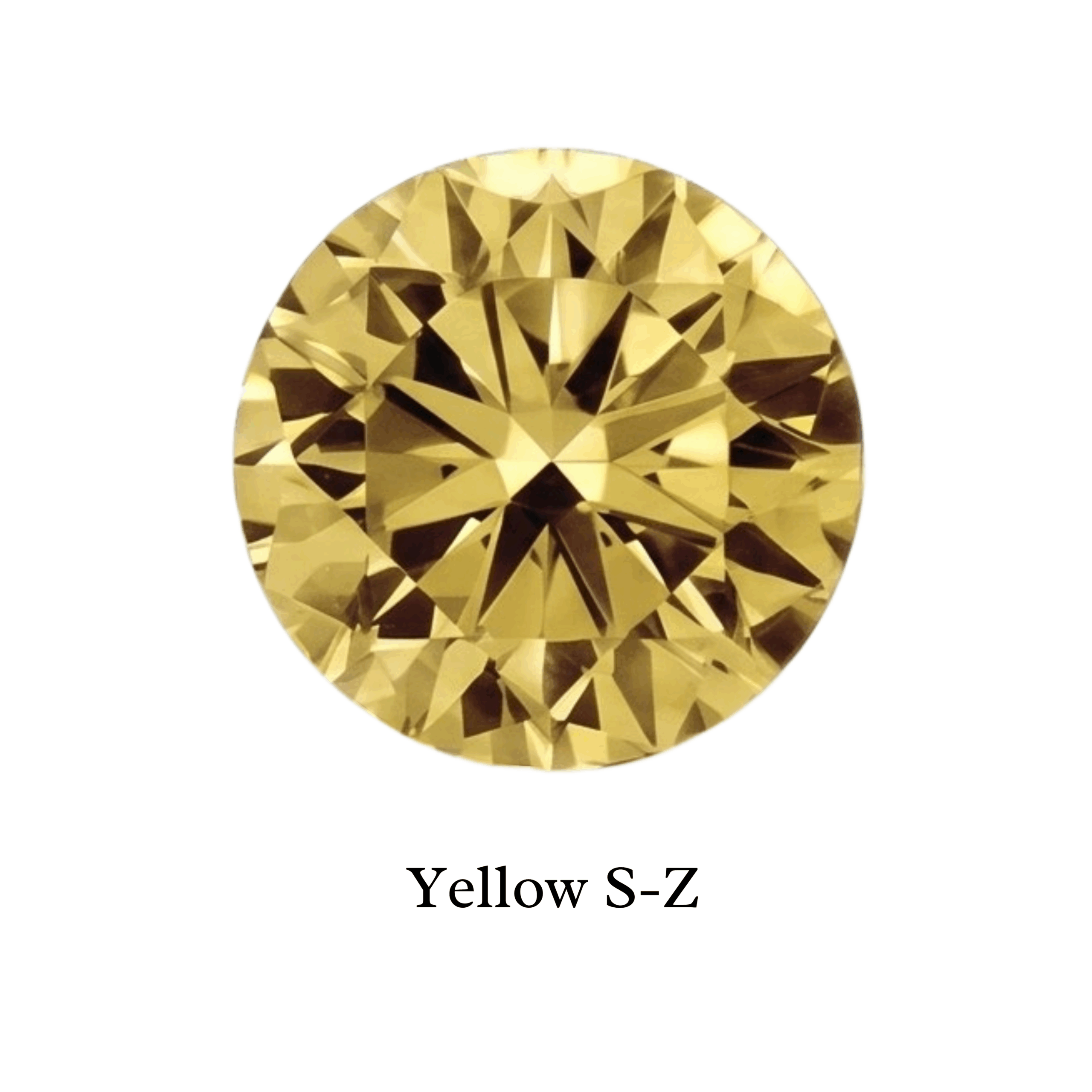
The most widely recognised diamond colour grading systems, used by leading gemmological laboratories including GIA, assess colour on a scale from D (colourless) to Z (light yellow or brown). This scale measures the presence of colour within a diamond, with less colour generally indicating a higher grade.
Colourless Diamonds (D-F)
Diamonds graded D to F are considered colourless, showing little to no visible colour when viewed face-up. They are valued for their bright, neutral appearance and strong light return, often appearing crisp and white in a variety of lighting conditions.
Near-Colourless Diamonds (G-J)
Diamonds in the G to J range contain slight traces of colour, which are often difficult to detect once set, particularly without comparison stones. They are widely used as they can offer a balance between appearance and value, and may still appear bright and white depending on cut quality, setting, and lighting. Their slight warmth often goes unnoticed, especially in settings like white or yellow gold.
Faint to Light Colour (K-Z)
Diamonds graded K to Z show increasing levels of visible colour, typically ranging from light yellow to light brown tones. These diamonds are less commonly used in traditional white diamond jewellery but may be selected for specific design preferences, particularly where a warmer appearance is desired or complemented by certain metal choices.
Clarity
Clarity refers to the presence of natural inclusions (internal characteristics) and blemishes (surface features) within a diamond. These are formed during the diamond’s natural growth deep within the Earth. Most diamonds contain some degree of these characteristics, and clarity grading assesses their visibility under 10x magnification, with some also being visible to the naked eye depending on their size, position, and nature.
In many cases, these features are microscopic and have no impact on the diamond’s durability or structural integrity. Clarity is therefore used to describe how “clean” a diamond appears, with fewer or less visible characteristics generally resulting in a higher clarity grade.
Illustration for guidance only; actual appearance may vary.
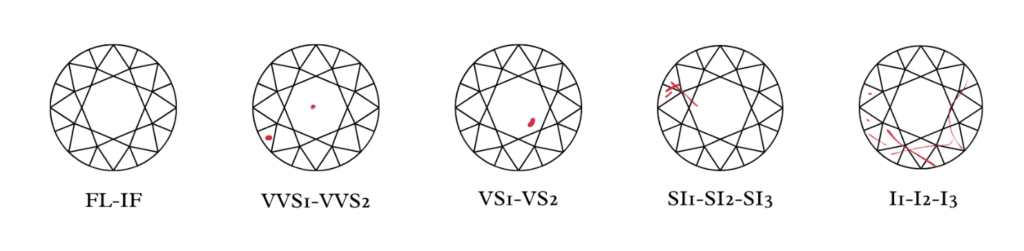
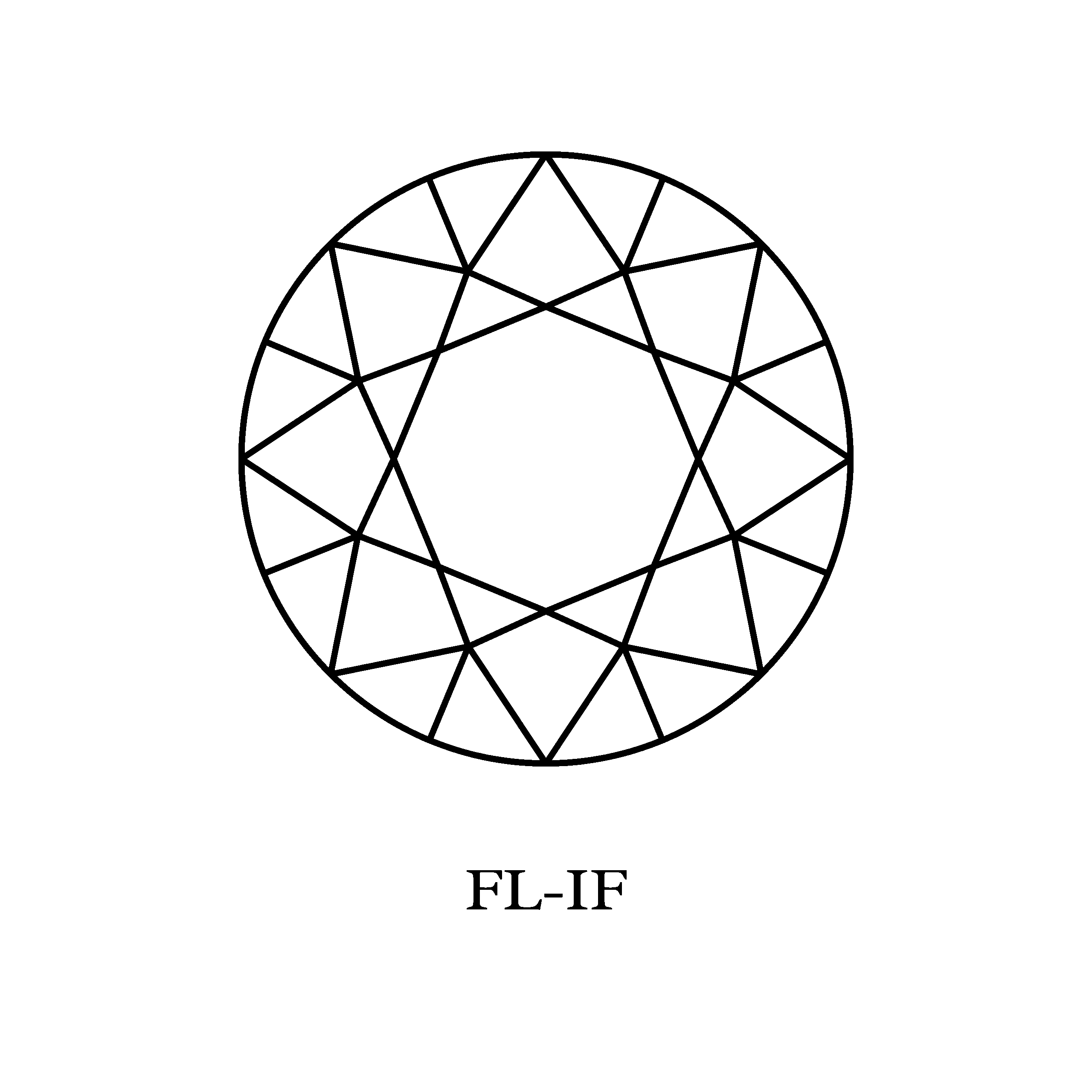




FL & IF – Flawless & Internally Flawless:
These are the highest clarity grades. Flawless diamonds contain no inclusions or blemishes visible under magnification, while Internally Flawless diamonds have no internal inclusions but may have very minor surface characteristics. Both are exceptionally rare and appear identical to the eye in most conditions.
Very, Very Slightly Included (VVS1 and VVS2):
Inclusions are extremely small and very difficult to detect, even under magnification. These diamonds represent exceptional clarity and are typically only identifiable by trained gemmologists.
Very Slightly Included (VS1 and VS2):
Inclusions are minor and can be seen under magnification, but are usually not visible to the naked eye. This range is commonly used in fine jewellery, offering a strong balance between clarity and appearance.
Slightly Included (SI1 and SI2):
Inclusions are more noticeable under magnification and may, in some cases, be visible without magnification depending on their nature and position. Many SI diamonds still appear bright and attractive once set, particularly when inclusions are not prominent face-up.
Included (I1, I2, I3):
Inclusions are visible without magnification and may affect the diamond’s overall appearance. These grades are less commonly used in fine jewellery, where higher visual clarity is typically preferred.
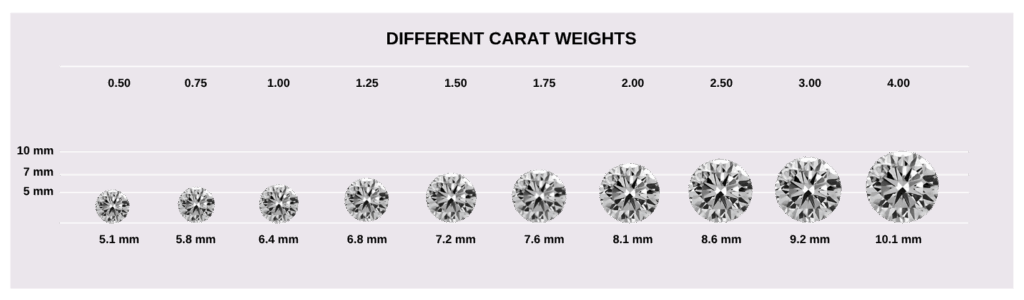
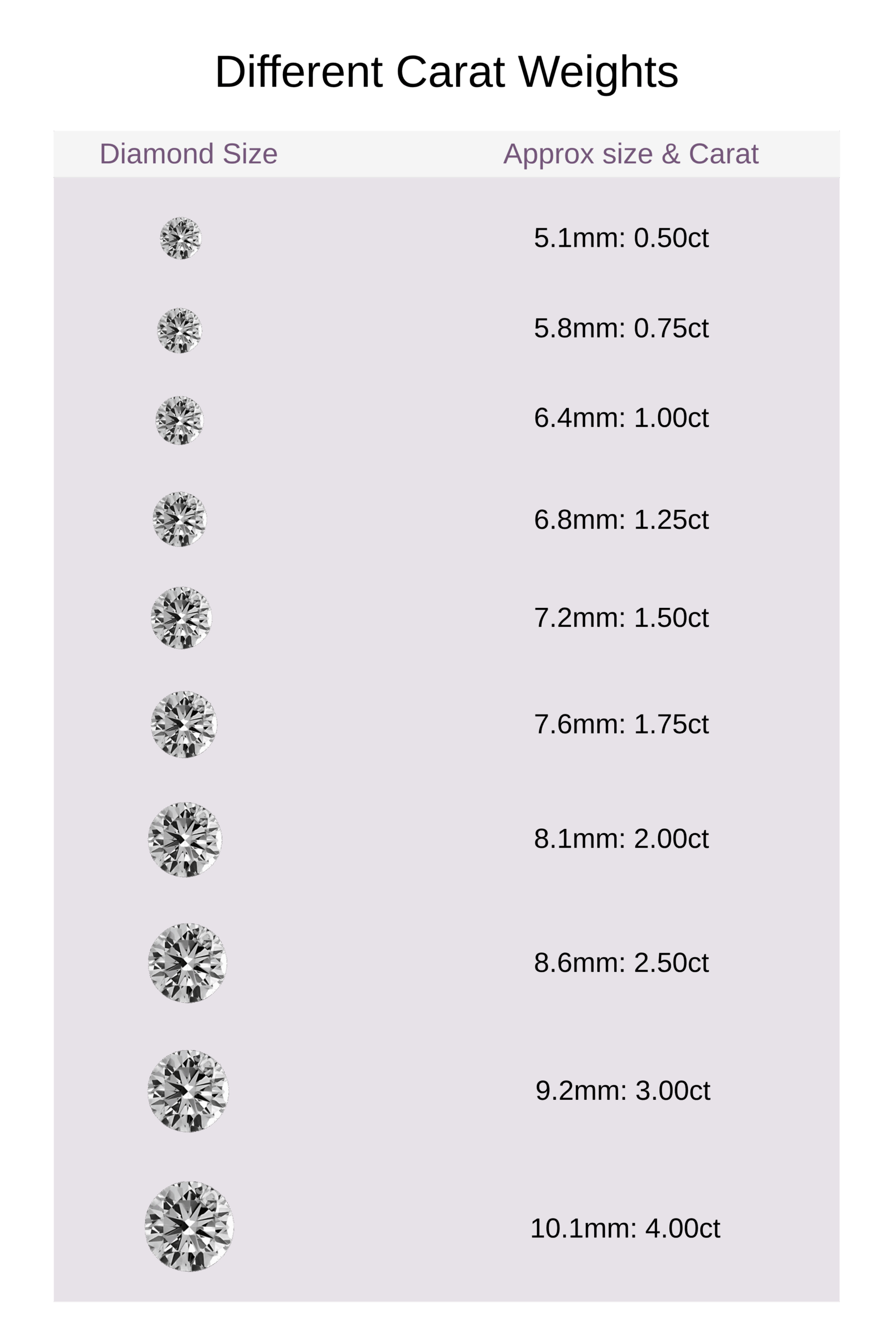
Carat
Illustration for guidance only; actual appearance may vary.
What is Diamond Fluorescence?
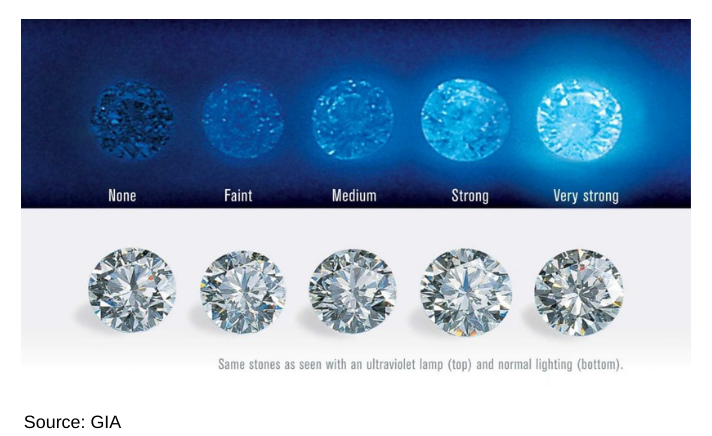
Diamond fluorescence is essentially how ultraviolet (UV) light affects a diamond. Similar to how whites appear brighter or teeth seem to glow under UV light, diamonds emit visible light when exposed to UV rays. On a Diamond Grading Report, fluorescence indicates the strength of this reaction to UV light, an essential component of daylight.
Certification
Every mined diamond above 0.30 carats is certified by leading gemmological laboratories, providing an independent assessment of its quality and characteristics. Each diamond is accompanied by a detailed grading report that records its key specifications in a standardised format, ensuring clarity, transparency, and confidence when selecting a stone. These reports are used across the industry to document and verify a diamond’s details, allowing each stone to be independently assessed and accurately compared.
Certification number & Verification
Each report is issued with a unique certification number, which can be verified through the issuing laboratory’s official database. This ensures full traceability and confirms the authenticity and details of the diamond.
Key Grading Information
A grading report typically includes the diamond’s shape (for example, round or princess), precise measurements, carat weight (to two decimal places), colour grade (from D for colourless to Z for light yellow or brown), and clarity grade (from Flawless to Included). Together, these form the core identification and quality assessment of the diamond.
Cut, Polish & Symmetry
For round brilliant diamonds, the report also includes a cut grade, along with polish and symmetry assessments. These provide further insight into how the diamond has been finished and how it performs in terms of light return and overall appearance.
Additional Characteristics
Where present, fluorescence is recorded, along with any additional comments relating to the diamond’s individual features or identifying characteristics.
Diamond Plot
A plotted diagram is included to show the location of internal characteristics such as inclusions and any external features. This provides a visual reference for the diamond’s clarity profile and structure.
How much does it cost?
The cost of bespoke jewellery depends on the design, materials and gemstones you choose. We’ll work closely with you to create something that reflects your vision while keeping your budget in mind, with clear and transparent pricing throughout. Already have an idea in mind? Get in touch for a tailored quote, or book a design session to start exploring your options.
Knowledge Hub
At Durham Rose, we believe in empowering our clients with the knowledge they need to feel confident throughout their bespoke journey. While our team are always available to answer questions during consultations and throughout the process, we’ve also created a wealth of resources to help you understand every element of your jewellery and make informed decisions with confidence.
Jewellery Services
As a bespoke company, we offer a complete service that supports every stage, providing a seamless and personal experience designed entirely around you. From initial design through to creation and aftercare, every detail is thoughtfully considered to ensure your piece is crafted with complete care.
Explore Our Blog Posts
Curious about the world of bespoke jewellery? Discover the stories behind the process, gain insight into every stage of creating a unique piece, and find answers to your questions along the way. From designing the perfect engagement ring to understanding gemstones and precious metals, our blog is your go-to guide for all things bespoke jewellery
How can I ensure the diamond is ethically sourced?
To ensure your diamond is ethically sourced, we adhere to the Kimberley Process, an international initiative designed to prevent the trade of conflict diamonds. This process ensures that diamonds are sourced from regions free from violence and human rights abuses. We partner with suppliers who comply with these standards, guaranteeing that our diamonds are responsibly and ethically mined.
Can I reuse my old diamond in the new design?
Yes! We’d be delighted to incorporate your existing diamond into your new bespoke design, giving it a fresh and meaningful life. We will assess the stone to ensure it’s suitable for the new setting and make recommendations based on its unique proportions. Please note that setting client-provided diamonds is done at your own risk, as we cannot guarantee their condition or durability, but we will handle them with the utmost care and expertise.