
Lab Grown Diamonds
Crafted by Science, Inspired by Nature
Lab-grown diamonds offer another way to choose a diamond for your jewellery. Created in laboratory environments, they have the same chemical composition and crystal structure as mined diamonds, with their key distinction being their origin.
Lab-grown diamonds offer another way to choose a diamond for your jewellery. Created in laboratory environments, they have the same chemical composition and crystal structure as mined diamonds, with their key distinction being their origin.
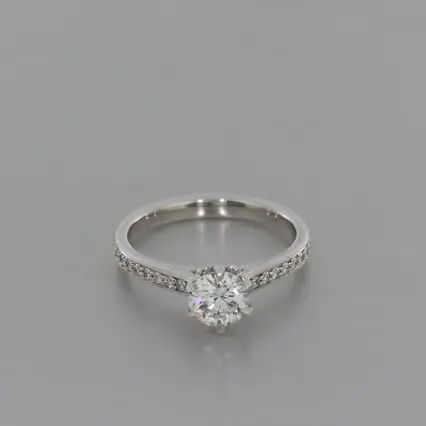
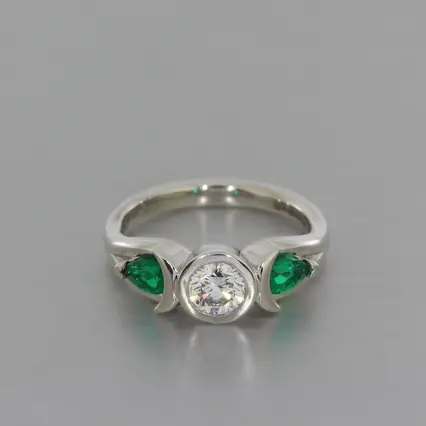
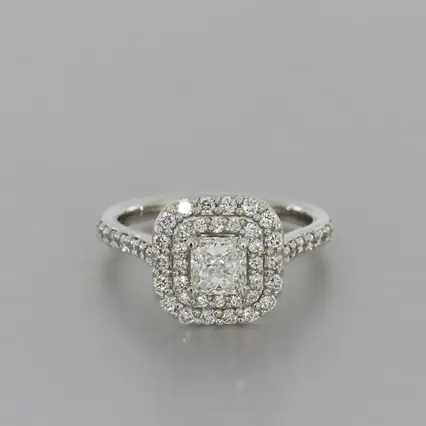
Are Lab-Grown Diamonds Right for You?
-
Aesthetics: Visually, lab-grown diamonds offer the same range of colours, clarities, shapes and sizes as mined diamonds. Their chemical composition, crystal structure and physical properties are the same, giving you plenty of choice when selecting a stone that suits your design and personal style.
-
Cost: One of the key differences is price. Lab-grown diamonds are generally priced lower than mined diamonds, although the difference varies depending on carat weight, colour, clarity and cut. This can give you the flexibility to explore a larger or higher-graded stone, depending on what matters most to you.
-
Durability: With the same hardness as mined diamonds, they are highly resistant to scratching and well suited to everyday jewellery. As with any diamond, however, they can still chip or become damaged by a significant impact, so appropriate care is important.
-
Ethical Sourcing: For some clients, the way a diamond is produced is an important part of the decision. Lab-grown diamonds are created in controlled laboratory environments rather than extracted through mining, although their environmental impact can vary depending on the energy and production methods used. We can discuss the information available for the stones we source if this is an important consideration for you.
-
Design Versatility: From classic solitaires and delicate bands to more distinctive bespoke designs, lab-grown diamonds can be incorporated into almost any style of jewellery. Their wide range of shapes, sizes and qualities gives us plenty of flexibility when selecting a stone to complement your design.
Crafting Brilliance: The Two Techniques Behind Lab-Grown Diamonds
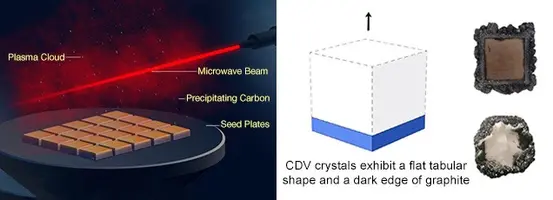
Chemical Vapor Deposition (CVD)
In this method, a diamond seed (a small piece of natural or synthetic diamond) is placed in a vacuum chamber along with a mixture of gases, typically containing methane and hydrogen. When the chamber is heated to extreme temperatures, the gases break down, and carbon atoms are deposited onto the diamond seed, causing it to grow layer by layer. This process creates a diamond that is chemically identical to natural diamonds. CVD is known for its ability to produce high-quality diamonds with exceptional purity and clarity.
High Pressure High Temperature (HPHT)
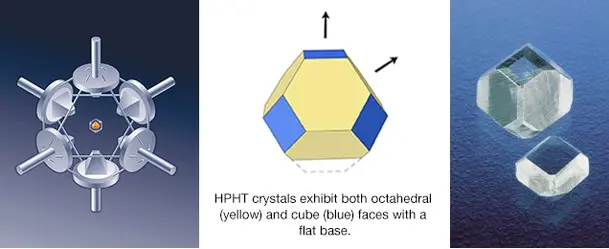
In the HPHT method, a small diamond seed is placed in a press along with a carbon source, typically graphite, and a metal catalyst such as nickel or iron. The press subjects the diamond seed to extreme pressures of around 5-6 GPA (gigapascals) and temperatures of about 1400-1600°C. Under these conditions, the carbon source melts and dissolves in the diamond seed, allowing new diamond crystals to grow around it. The process typically takes several days to weeks to complete. HPHT diamonds are known for their large size and can exhibit unique colours due to the presence of impurities during growth.
Understanding the 4C’s
The 4Cs, Cut, Colour, Clarity and Carat, are the internationally recognised standards used to describe a diamond. Together, they help you understand the characteristics that influence a diamond’s appearance and value.
Each C tells you something different. Cut affects how the diamond interacts with light, Colour describes how much colour is present, Clarity looks at its natural internal and surface characteristics, and Carat refers to its weight.
Understanding the 4Cs gives you a useful starting point when comparing diamonds, while helping you focus on the qualities that matter most to you and your design.
Cut
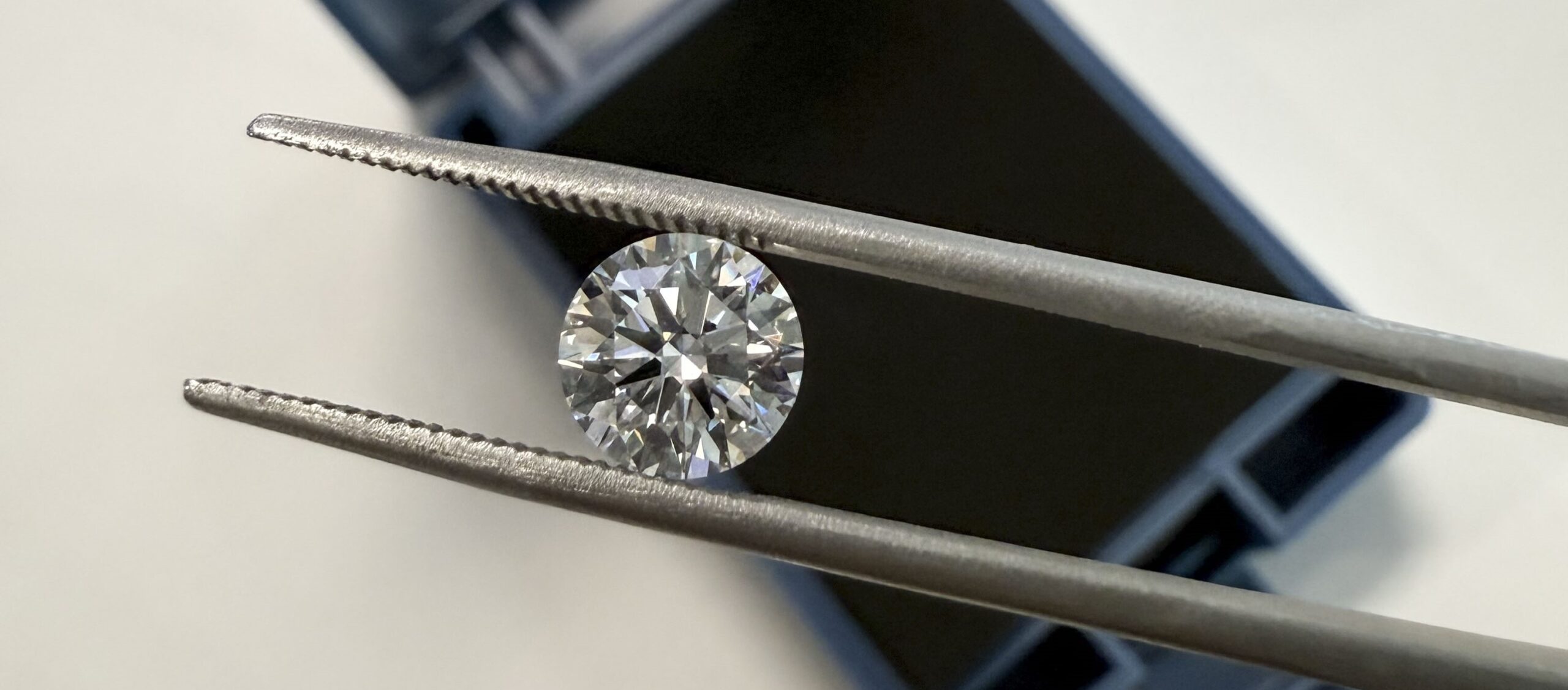
Diamond cut is considered one of the most important factors when selecting a diamond. In lab-grown diamonds, just as with natural diamonds, the quality of the cut plays a crucial role in determining how brilliantly the stone reflects and returns light. A well-cut diamond can appear brighter, more vibrant, and visually appealing, while a poorly cut diamond may look dull even if it has excellent clarity and colour. Therefore, paying close attention to the cut grade is essential when choosing a lab-grown diamond, as it can have a significant impact on the stone’s overall beauty and sparkle.
Fall in Love with an 8X® Lab-Grown Diamond:
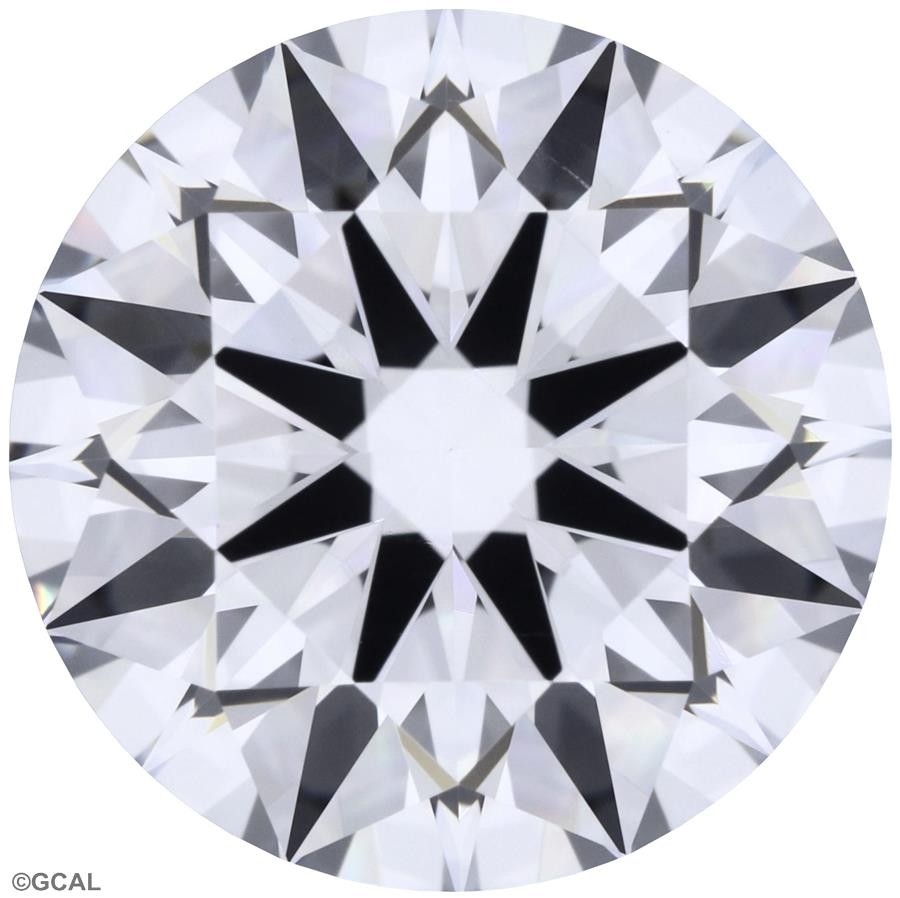
8X® Ideal Cut lab-grown diamonds are selected for their exceptional cut quality and precise craftsmanship. Each stone is assessed across multiple aspects of light performance and finish, including polish, symmetry, brilliance, fire and scintillation. The 8X® grading also recognises optical symmetry and the distinctive Hearts & Arrows pattern, created when the diamond’s facets are precisely aligned. Together, these characteristics help create a diamond with strong visual balance, brightness and lively light performance.
Source: GCAL USA
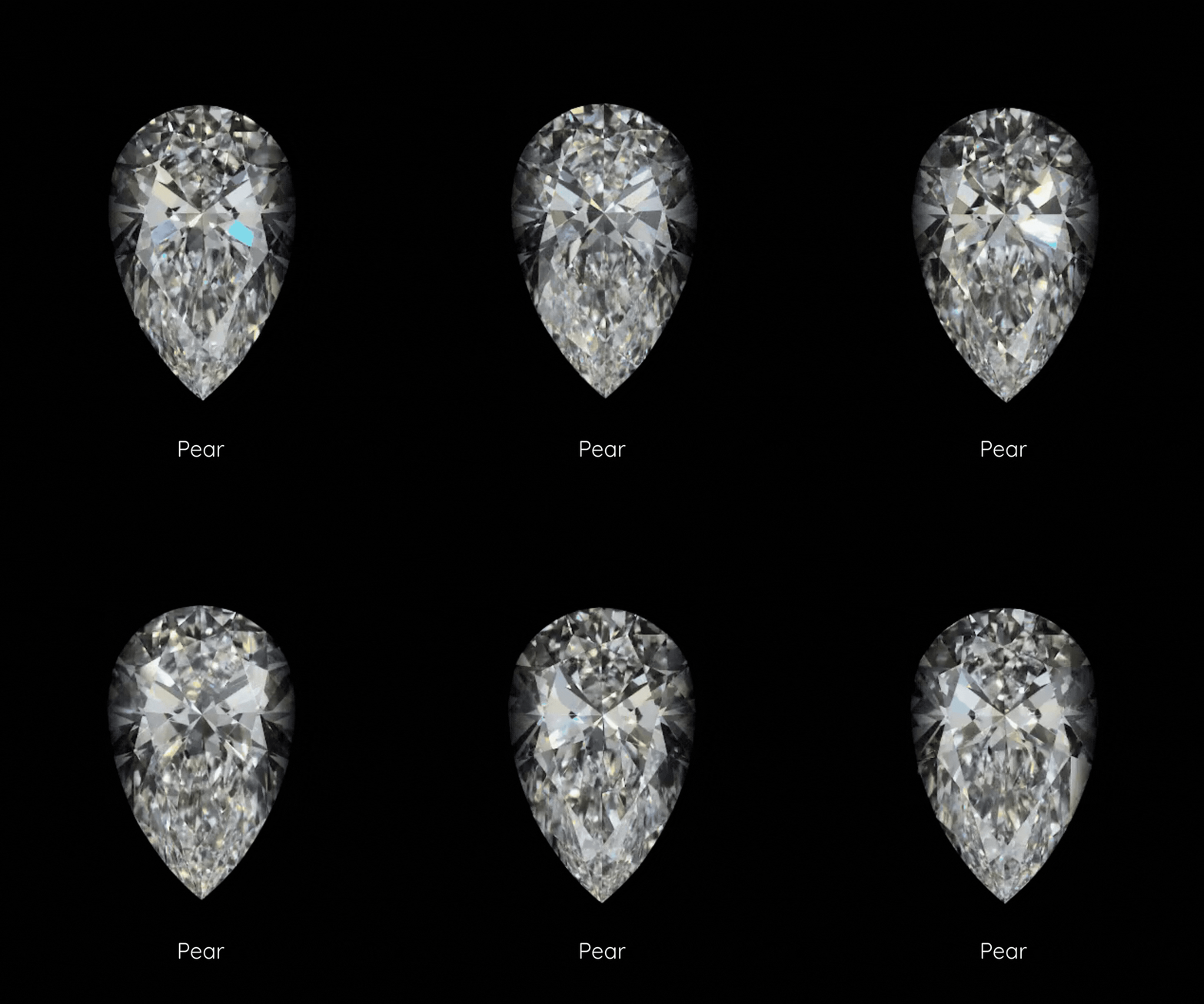
Available Shapes in 8x Diamonds




What Does 8X Mean?
The 8X Ultimate Cut Grade was developed to distinguish exceptional diamonds within the “Excellent” cut category. While more than half of all Round Brilliant Cut diamonds receive an “Excellent” cut grade, fewer than 1% meet the criteria for the 8X standard.
The GCAL 8X Ultimate Cut Grade provides an additional level of assessment, helping you identify diamonds that demonstrate exceptional precision and light performance, even when choosing a diamond online without seeing it in person.
Polish
Skill and time are required to produce a well polished diamond. GCAL gemologists examine every facet to ensure it is free of polish marks, burns and scratches
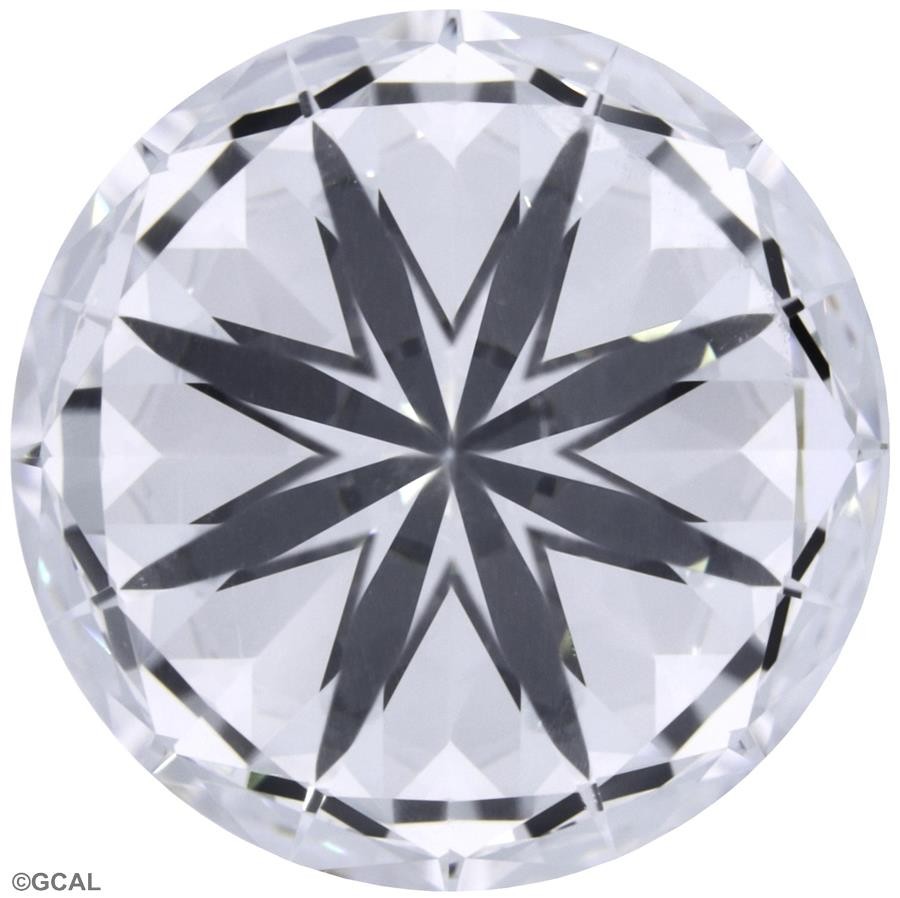
External Symmetry
Master cutters identically shape each facet around the diamond and ensure they are perfectly aligned. Only diamonds with precision faceting achieve a GCAL Excellent.
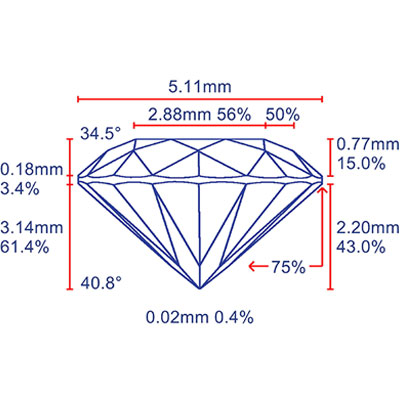
Proportions
Optical scanning technology measures each facet and angle to produce an accurate, to-scale diagram of every diamond.
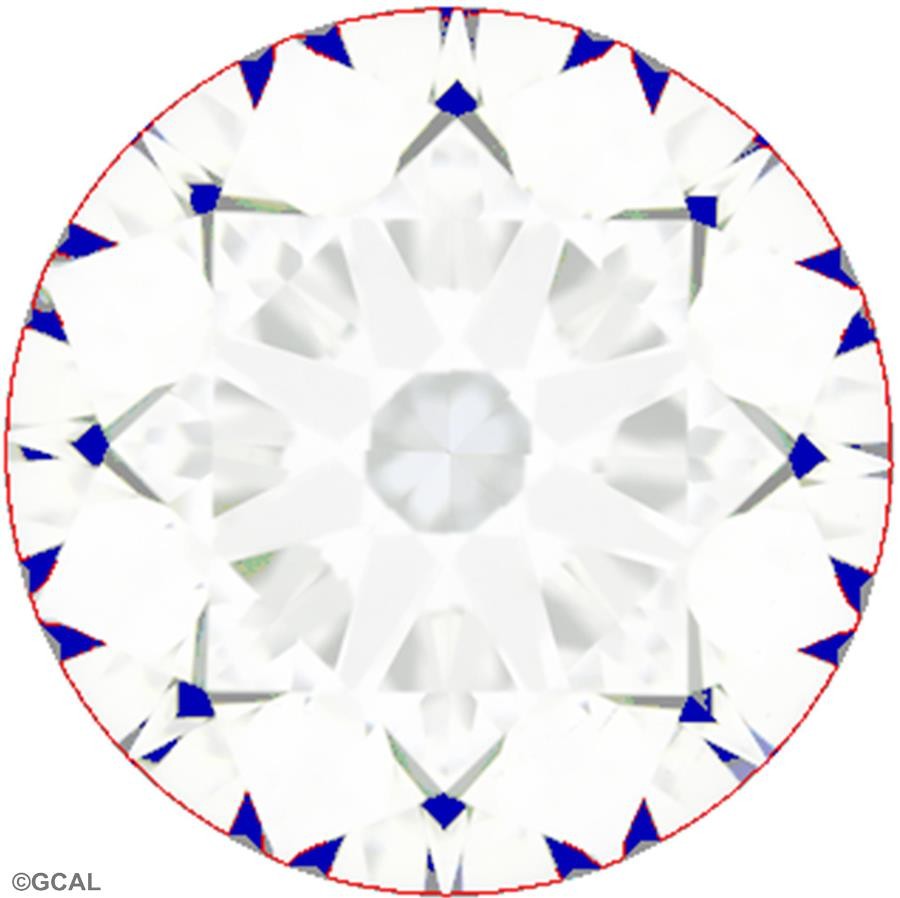
Optical Brilliance
is the overall return of white light to the viewer. It is measured to the thousandth decimal place and is represented in this image. The white areas indicate light return / brilliance, and the dark blue areas indicate light loss.
Fire
results when white light travels through a diamond and is dispersed into its rainbow of spectral colors. These flashes of colour contribute to sparkle and are best viewed as the diamond moves.

Scintillation
is the flashes of white light, or sparkle, produced when light is reflected from a diamond as it moves. This video shows the light returned from a single beam of light when your lab grown diamond is rotated in nine positions.
Colour
Diamond colour refers to the presence or absence of colour within a stone and is an important part of its overall appearance. Lab-grown diamonds are graded on the same colour scale as mined diamonds, ranging from colourless through to light tints, with less colour generally creating a brighter, more neutral appearance.
When selecting a diamond, colour is often a matter of personal preference, design style and price point. Some clients prefer a colourless or near-colourless diamond for a crisp, bright look, while others may prefer a slightly warmer tone as part of the character of the stone. Colour can also interact with the diamond’s cut and the setting it is placed in, so we consider how all of these elements work together when selecting a stone.
Illustration for guidance only; actual appearance may vary.
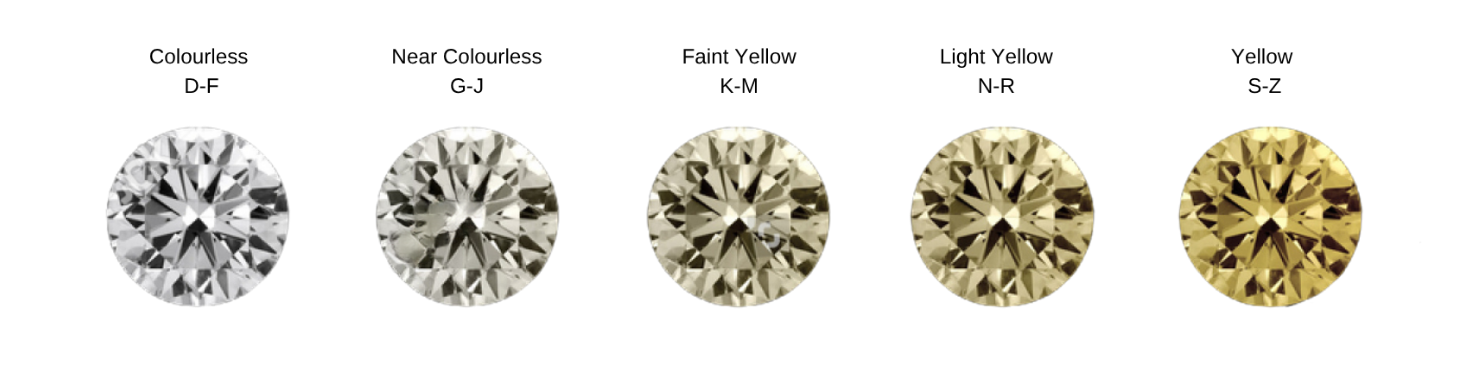
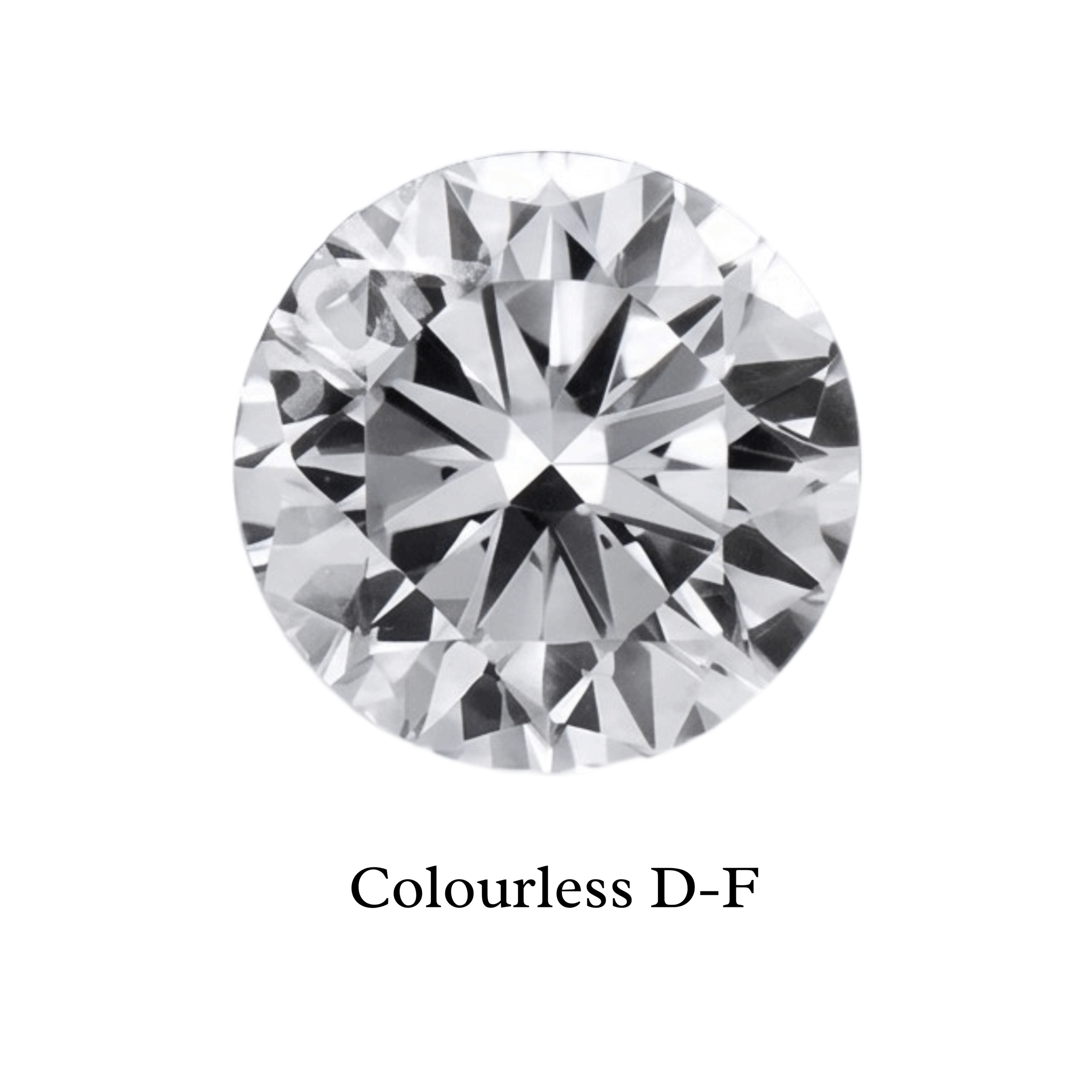
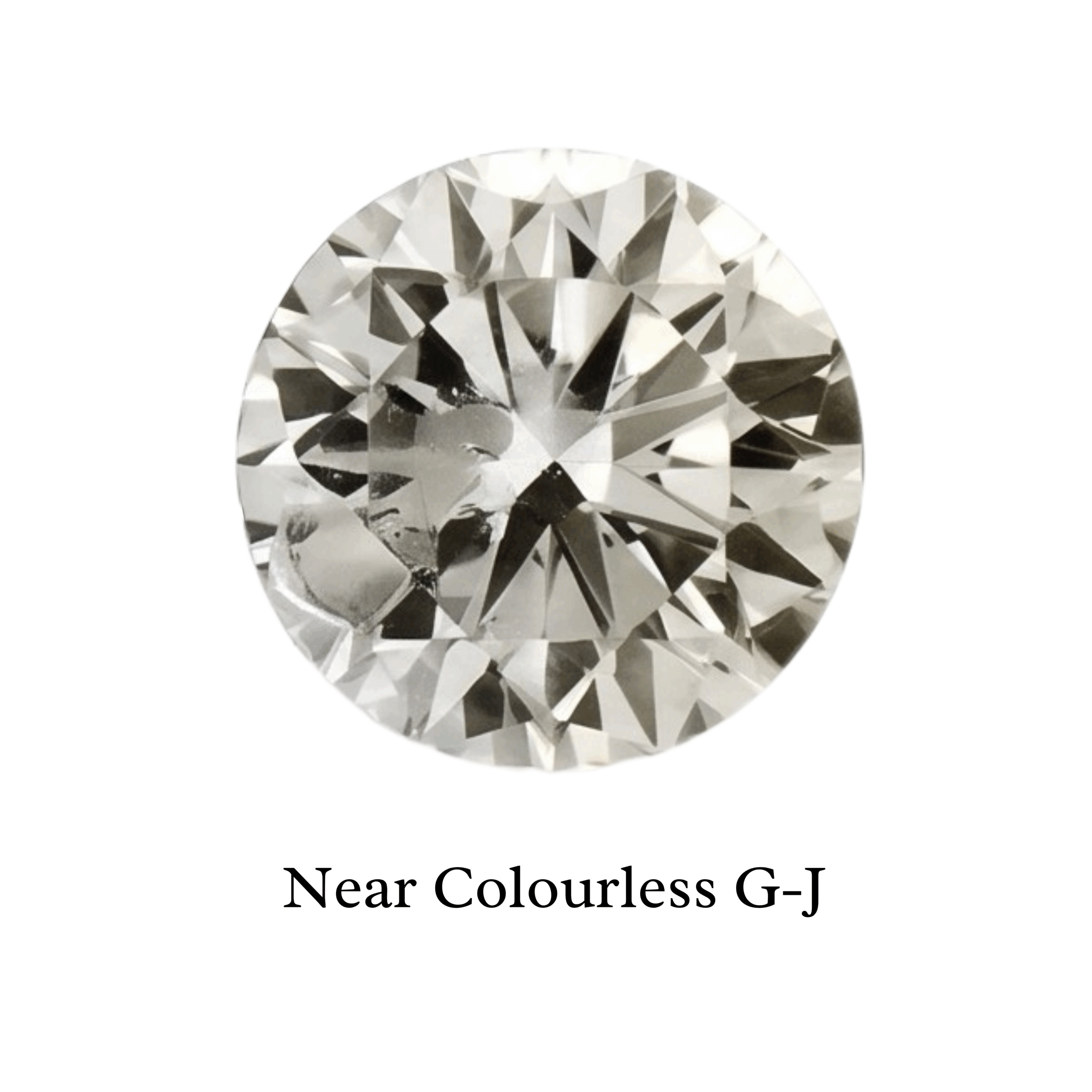
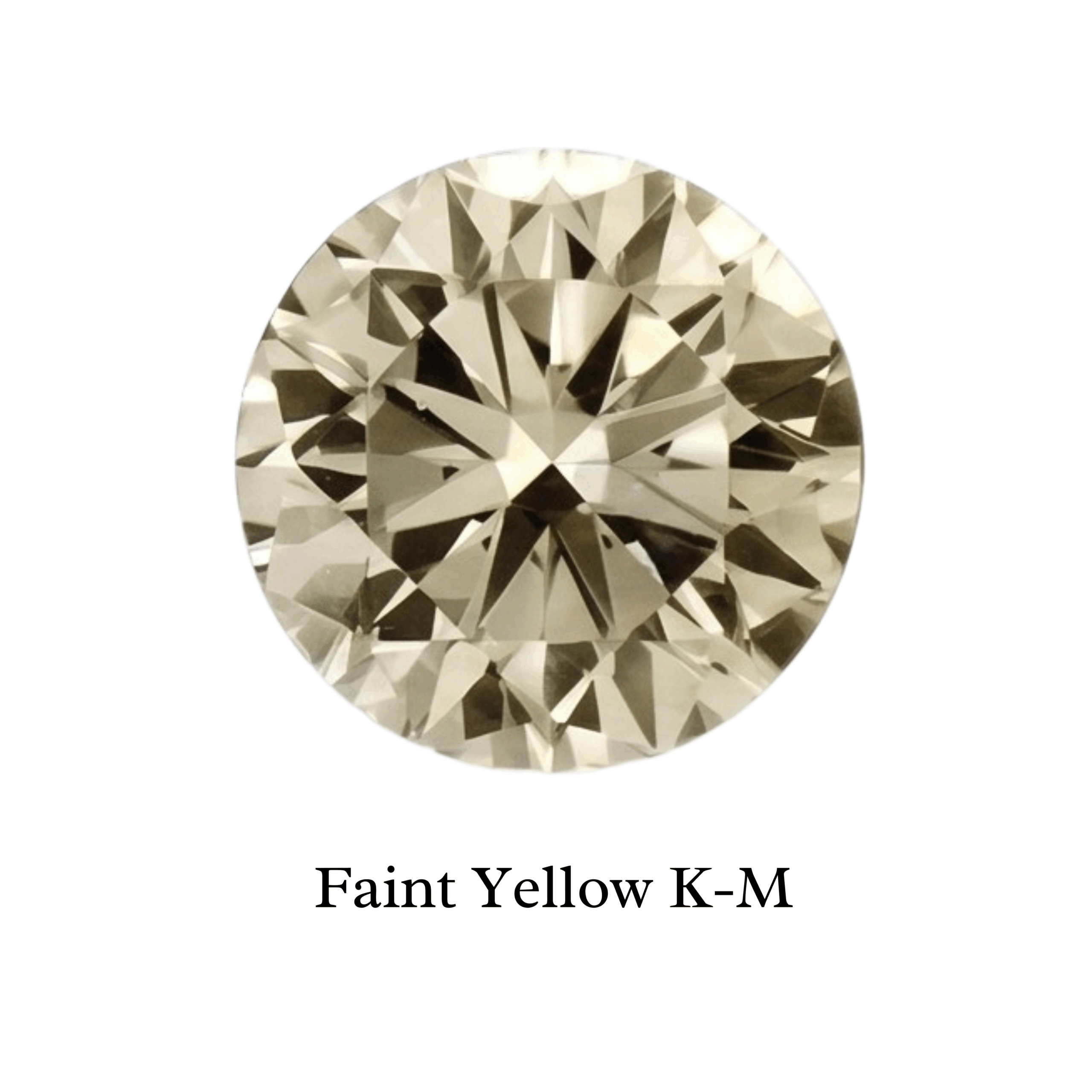
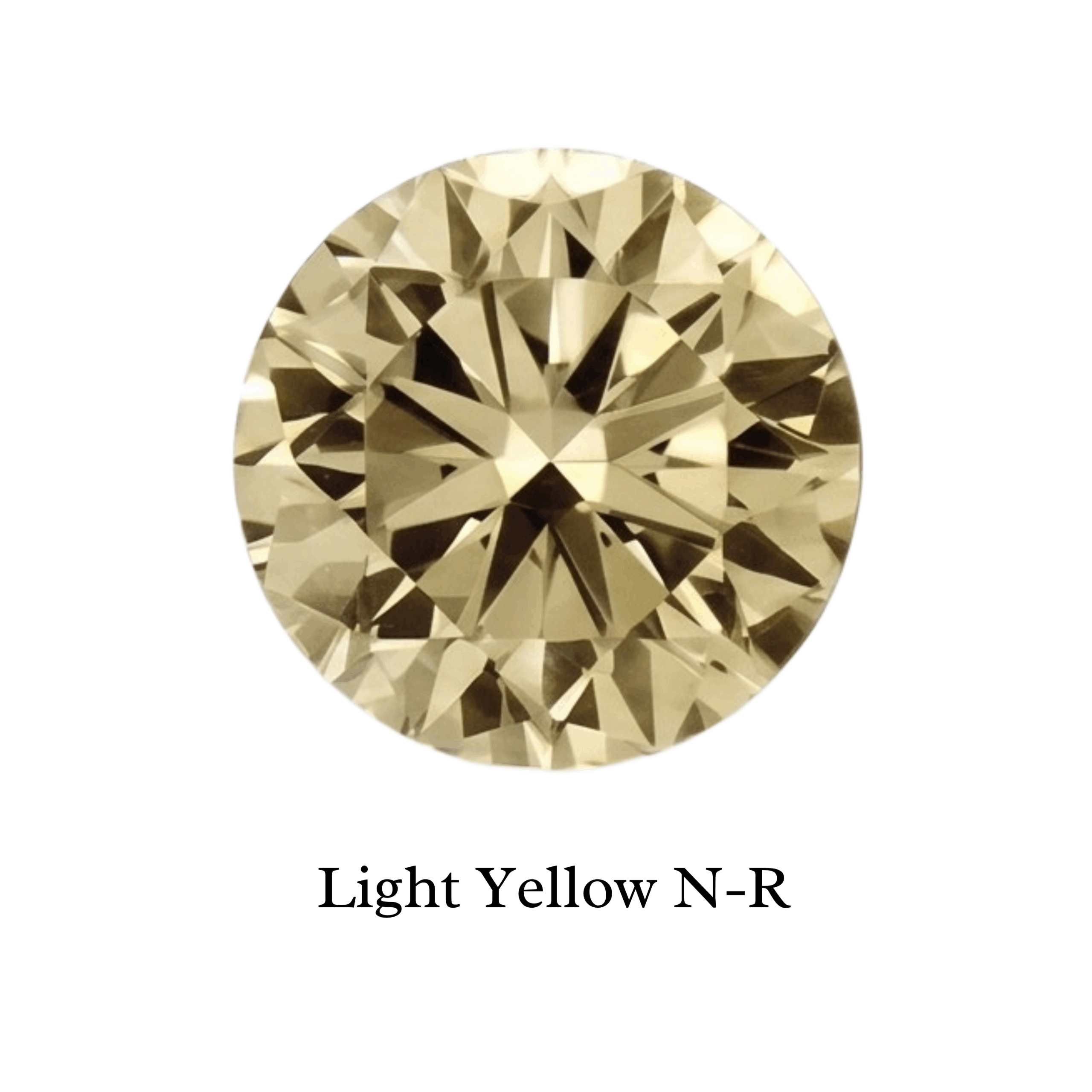
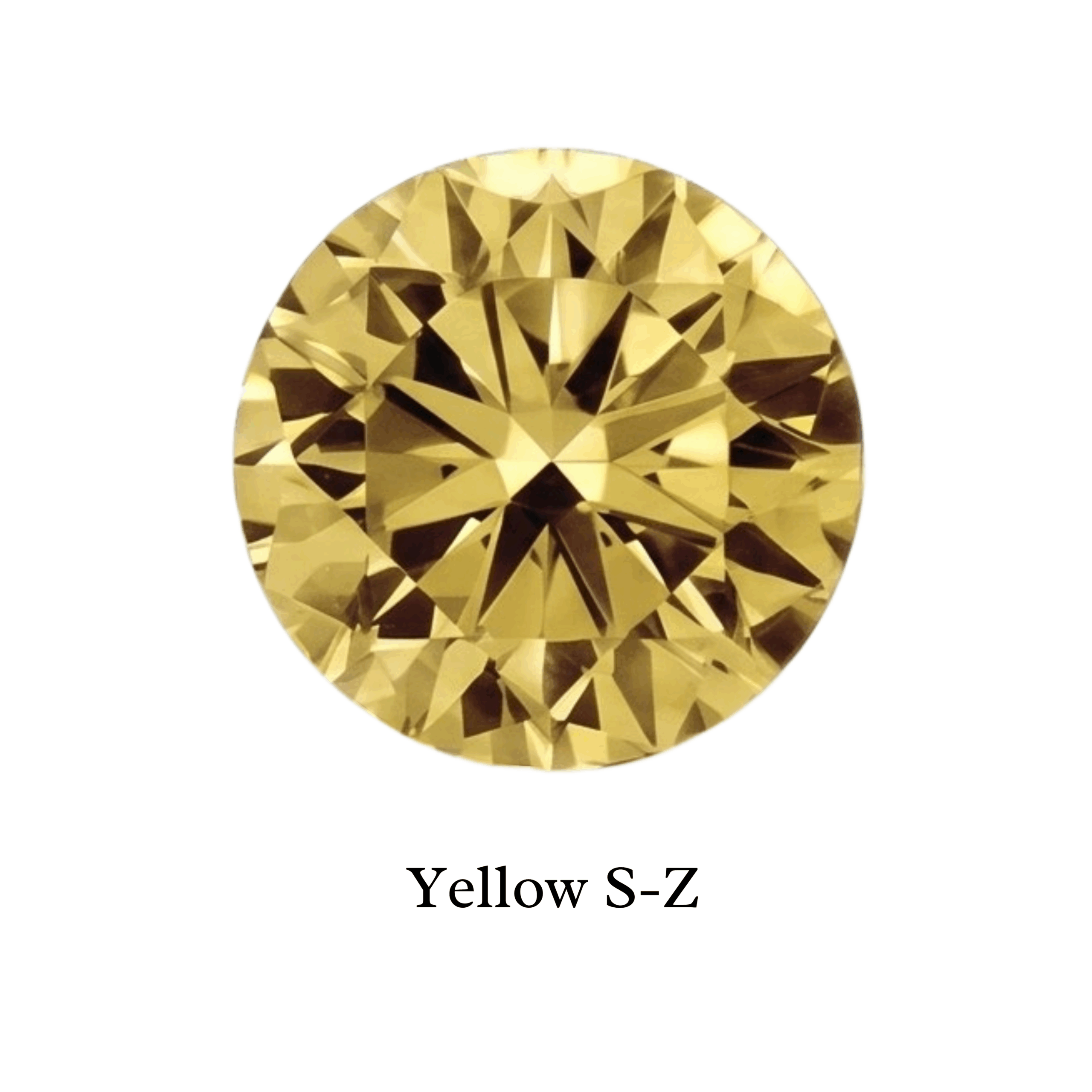
The most widely recognised diamond colour grading system, used by leading gemmological laboratories including GIA, grades diamonds from D (colourless) to Z (light yellow or brown). The scale measures the degree of colour present within a diamond, with less colour corresponding to a higher grade.
Colourless Diamonds (D-F)
Diamonds graded D to F are considered colourless, showing little to no detectable colour when viewed face-up. They are prized for their crisp, neutral appearance and can appear particularly bright when well cut
Near-Colourless Diamonds (G-J)
Diamonds graded G to J contain slight traces of colour, which can be difficult to detect once the diamond is set, particularly when viewed on its own. The appearance can vary depending on the diamond’s cut, proportions, size and setting, with many stones in this range still appearing bright and white to the eye. In some settings, particularly yellow or rose gold, a slight warmth may be less noticeable
Faint to Light Colour (K-Z)
Diamonds graded K to Z show increasingly visible colour, typically ranging from a subtle warmth through to light yellow or brown tones. These grades can be a good choice for designs where a warmer appearance is part of the desired aesthetic, particularly when paired with complementary metal colours.
Clarity
Clarity refers to the presence of inclusions (internal characteristics) and blemishes (surface characteristics) within a diamond. These characteristics can occur as a diamond forms, whether naturally within the earth or through a laboratory process.
While no diamond is completely free from internal or surface characteristics, many are so small that they cannot be seen without magnification. The fewer and less visible these characteristics are, the higher the clarity grade is generally likely to be.
When selecting a diamond, we consider not only its clarity grade but also how clean it appears to the naked eye, as diamonds with the same grade can still differ in their individual characteristics and overall appearance.
Illustration for guidance only; actual appearance may vary.

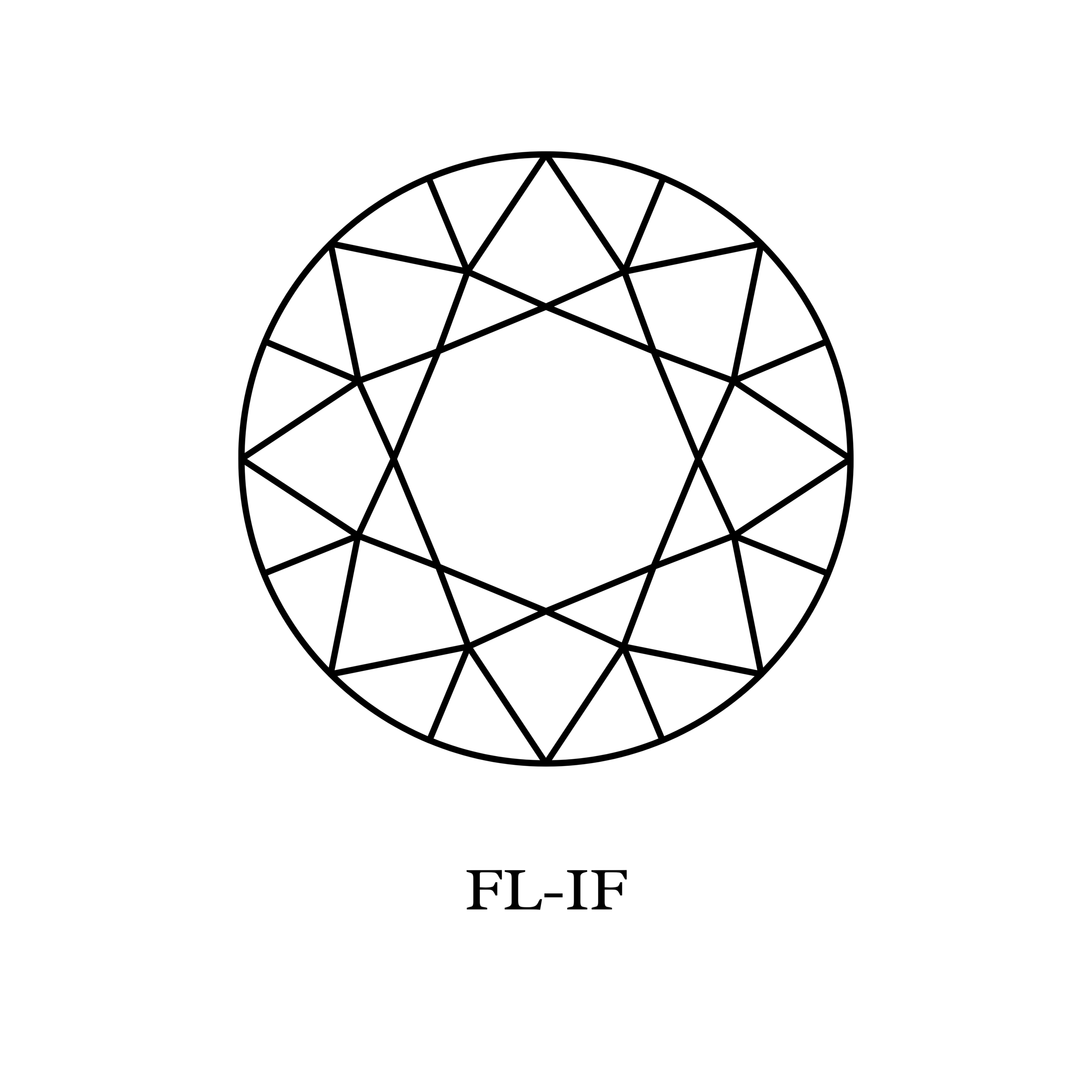
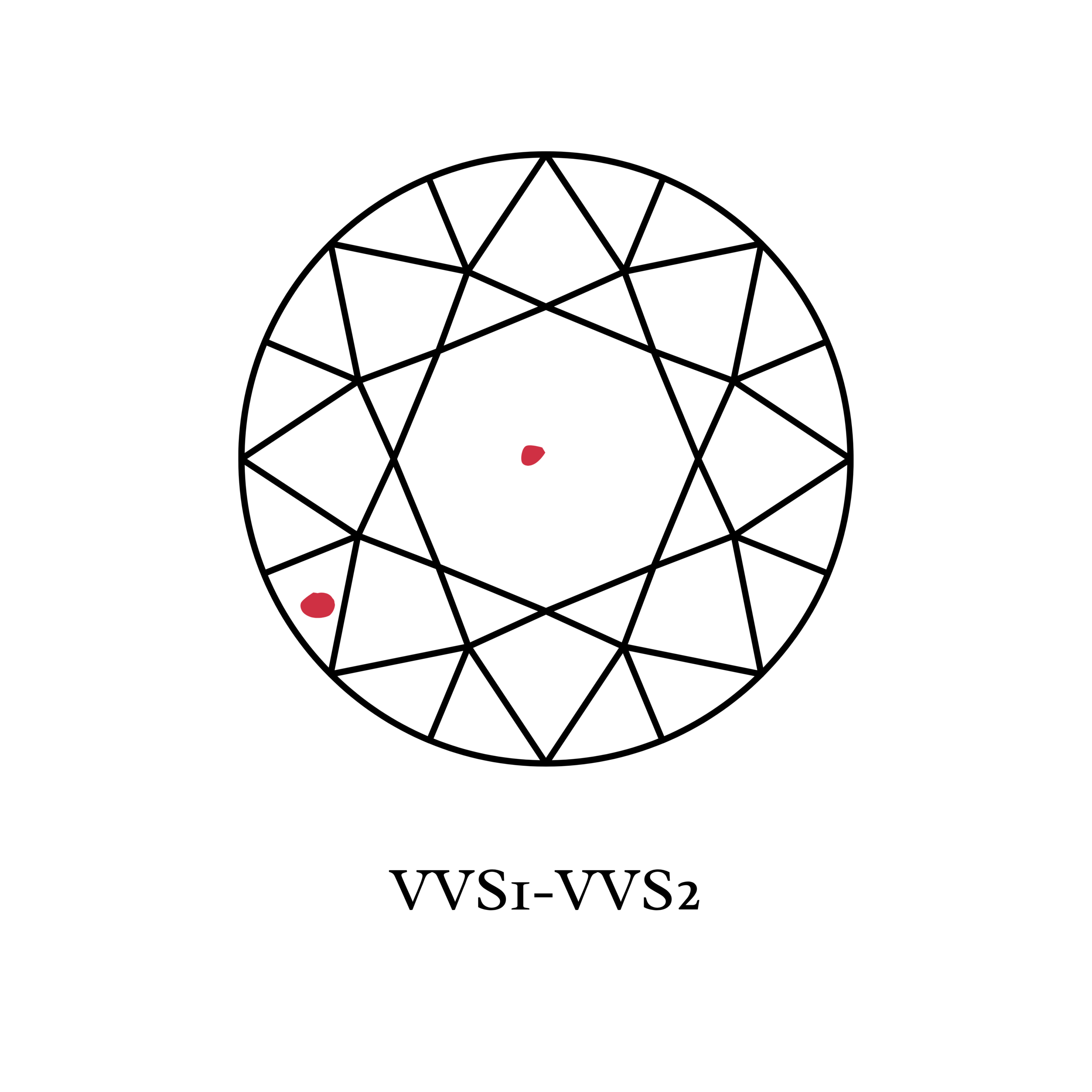
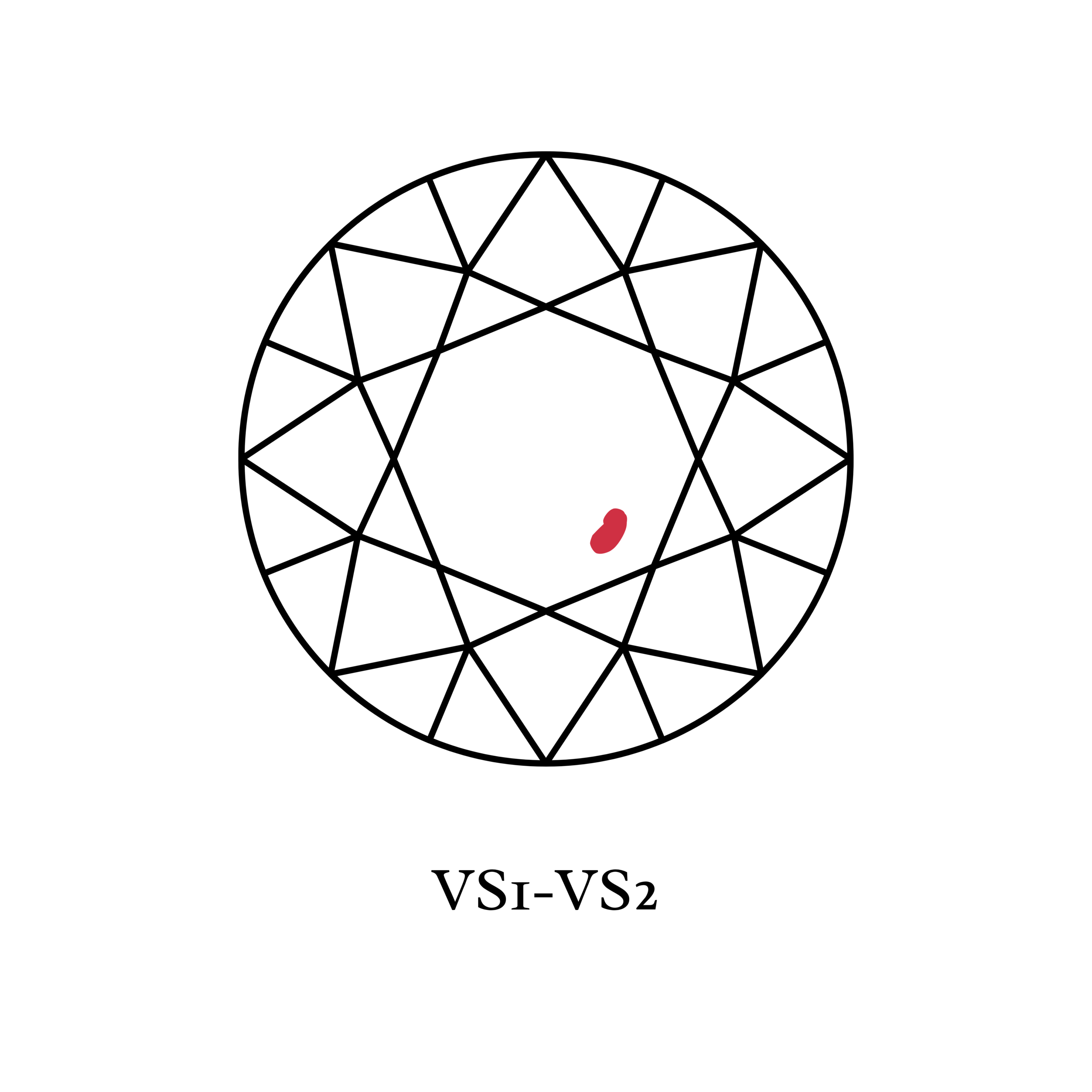
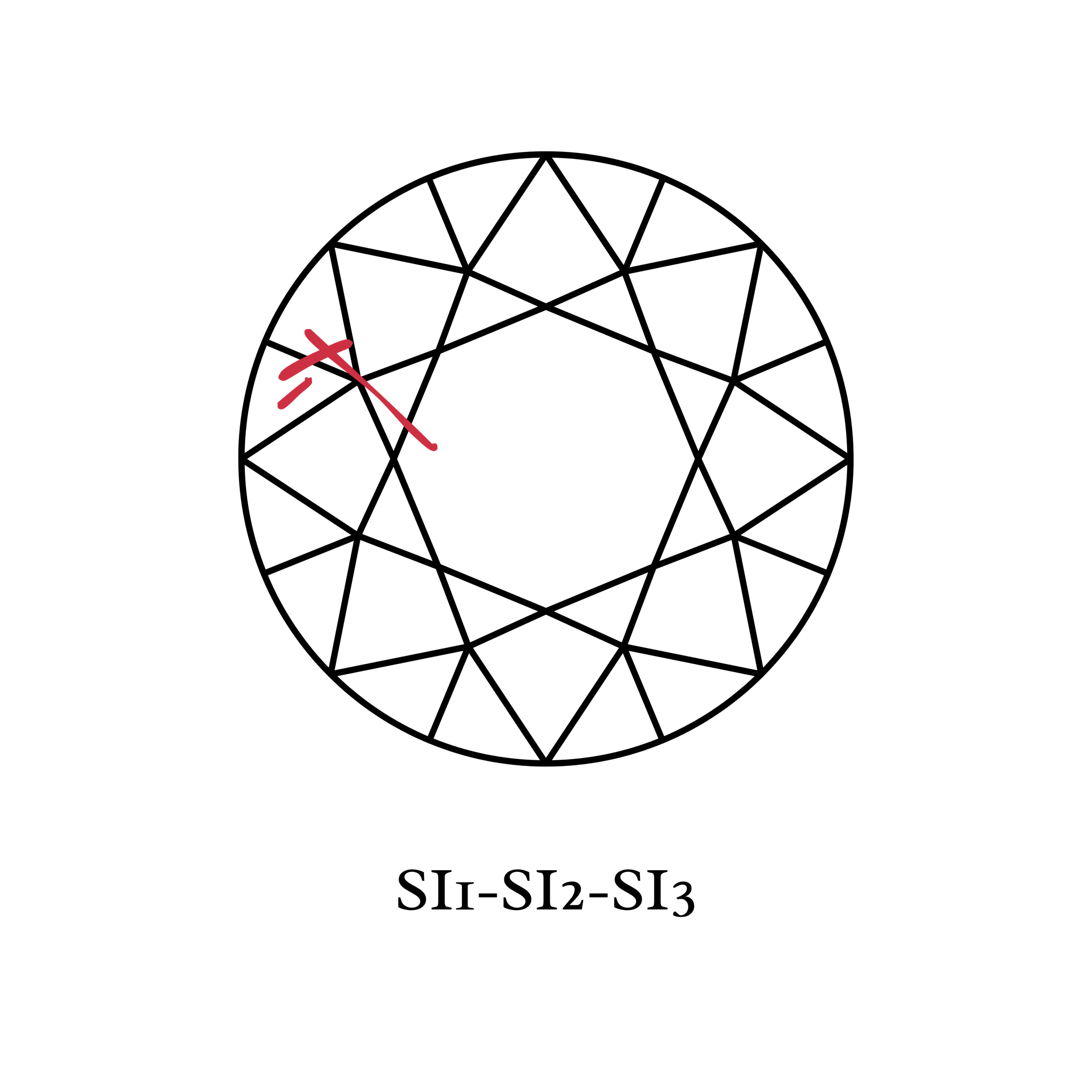
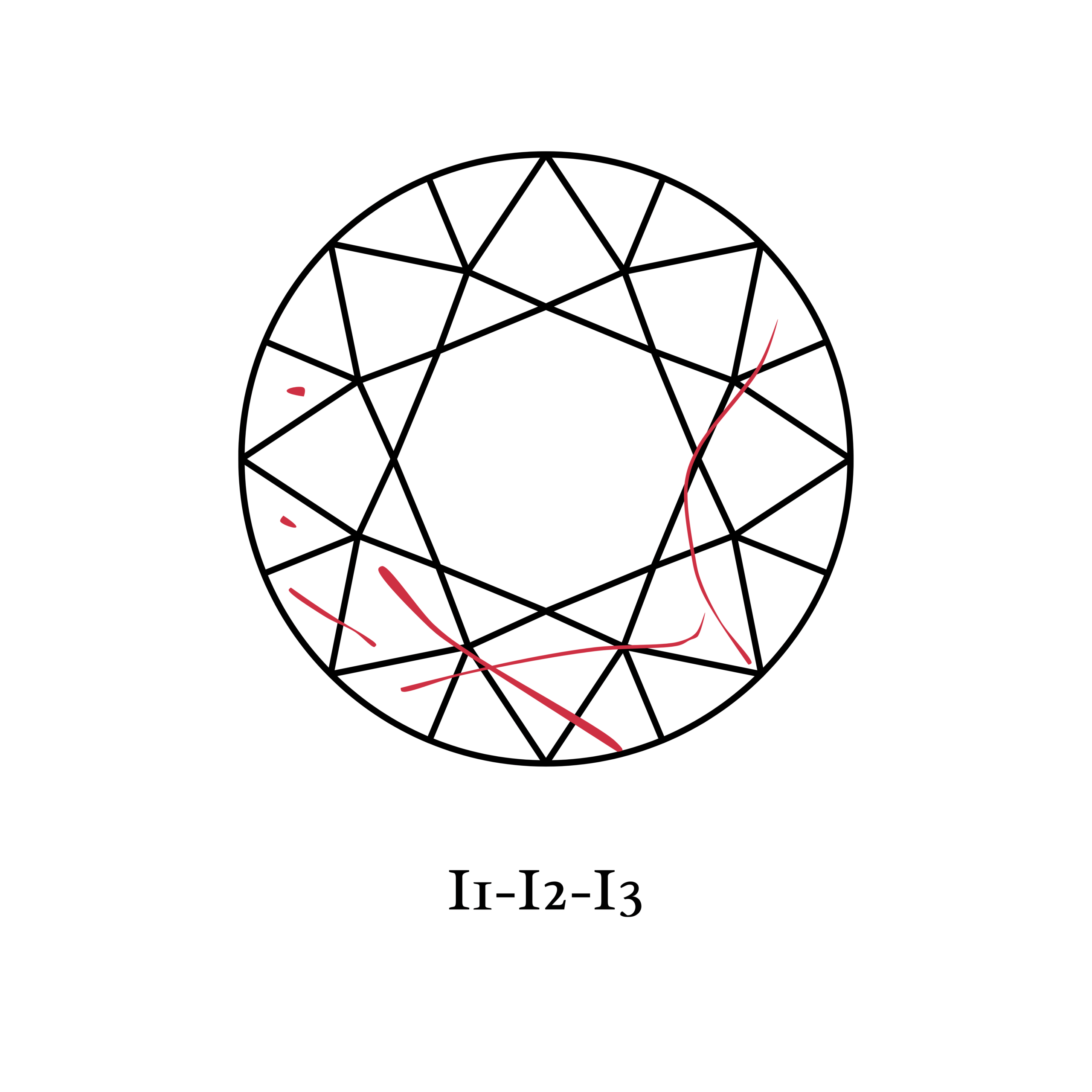
L & IF – Flawless & Internally Flawless:
At the top of the clarity scale, Flawless diamonds have no inclusions or blemishes visible under 10x magnification, while Internally Flawless diamonds have no internal inclusions but may have very minor surface characteristics. Both are exceptionally rare.
Very, Very Slightly Included (VVS1 and VVS2):
With extremely small inclusions that are very difficult to detect under 10x magnification, VVS diamonds offer exceptional clarity and are typically only identifiable by a trained gemmologist.
Very Slightly Included (VS1 and VS2):
Minor inclusions are present but are generally difficult to see without magnification. VS clarity is widely used in fine jewellery and can offer an excellent balance between clarity and appearance.
Slightly Included (SI1 and SI2):
At this level, inclusions become more noticeable under magnification and may be visible to the naked eye depending on their size, position and nature. Many SI diamonds can still appear clean and attractive when viewed face-up.
Included (I1, I2, I3):
Here, inclusions are generally visible to the naked eye and may have a greater effect on the diamond’s overall appearance. These grades are less commonly selected for fine jewellery.
Carat
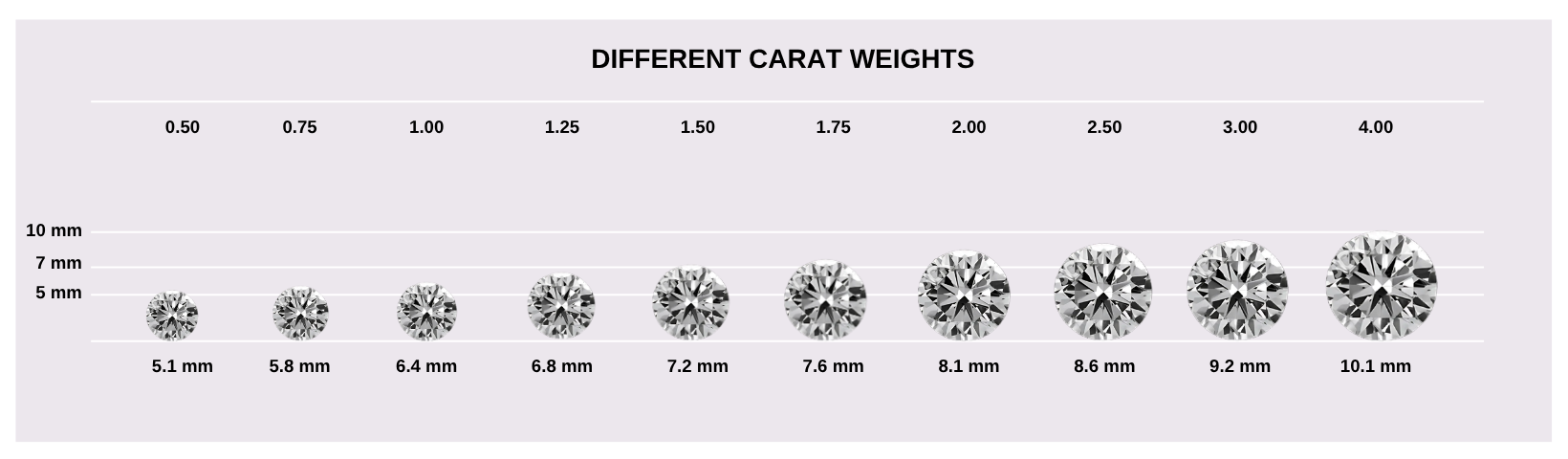
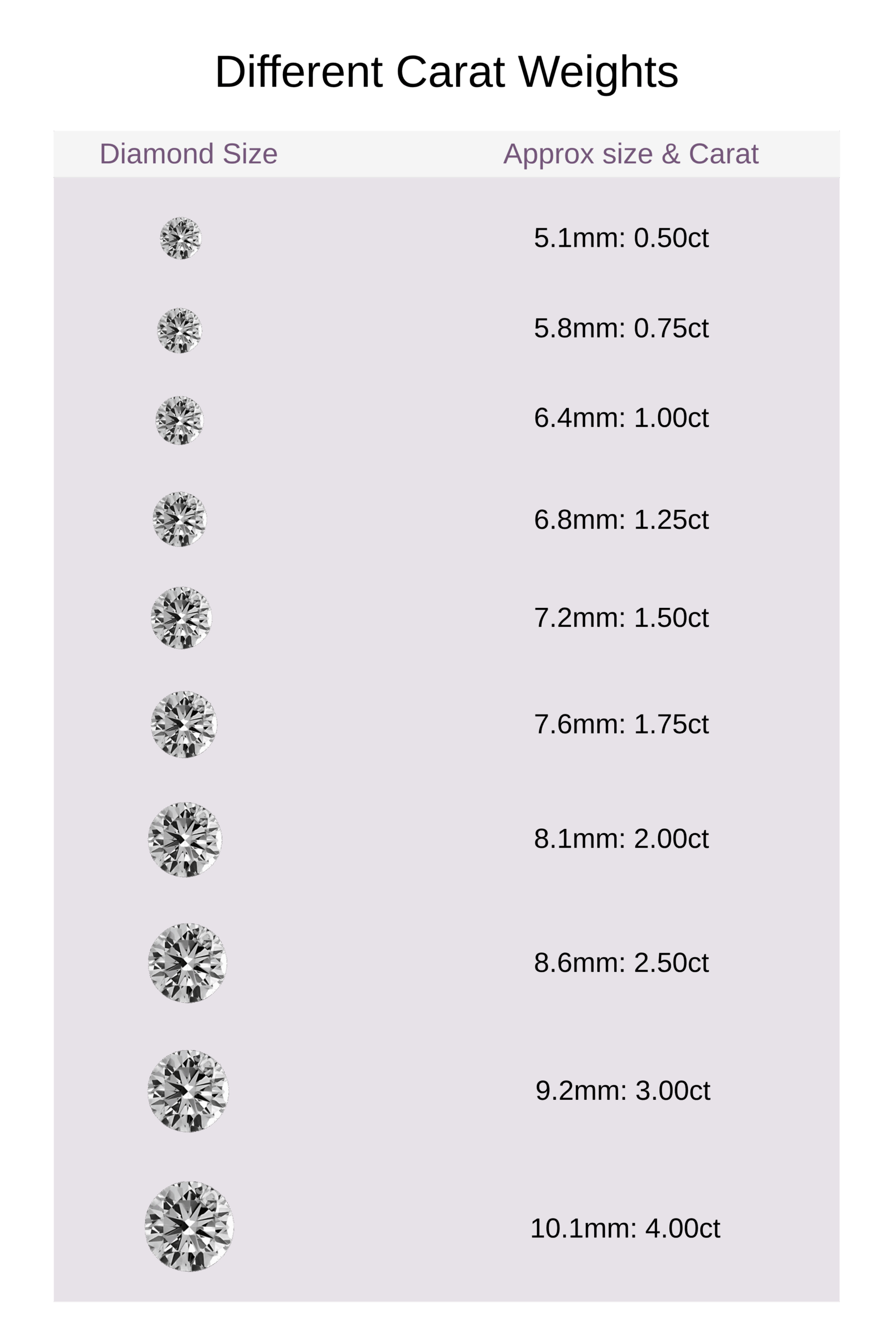
Carat refers to the weight of a diamond, with one carat equal to 0.2 grams. It is important to remember that carat weight is not the same as a diamond’s physical size. Two diamonds with the same carat weight can have different measurements and look noticeably different once set.
As carat weight increases, diamonds generally become rarer, which is reflected in their value. However, weight alone does not determine how large or impressive a diamond appears. Cut, proportions, and shape all influence its face-up size and how effectively it interacts with light. For example, some diamond shapes can appear larger for their carat weight, while a well-cut stone can look particularly bright and lively.
When selecting a carat weight, we consider how the stone’s dimensions, proportions and shape will work within the overall design. This helps us find the right balance between the size of the diamond, its appearance and the proportions of your finished piece.
Illustration for guidance only; actual appearance may vary.
Lab Diamond Certification
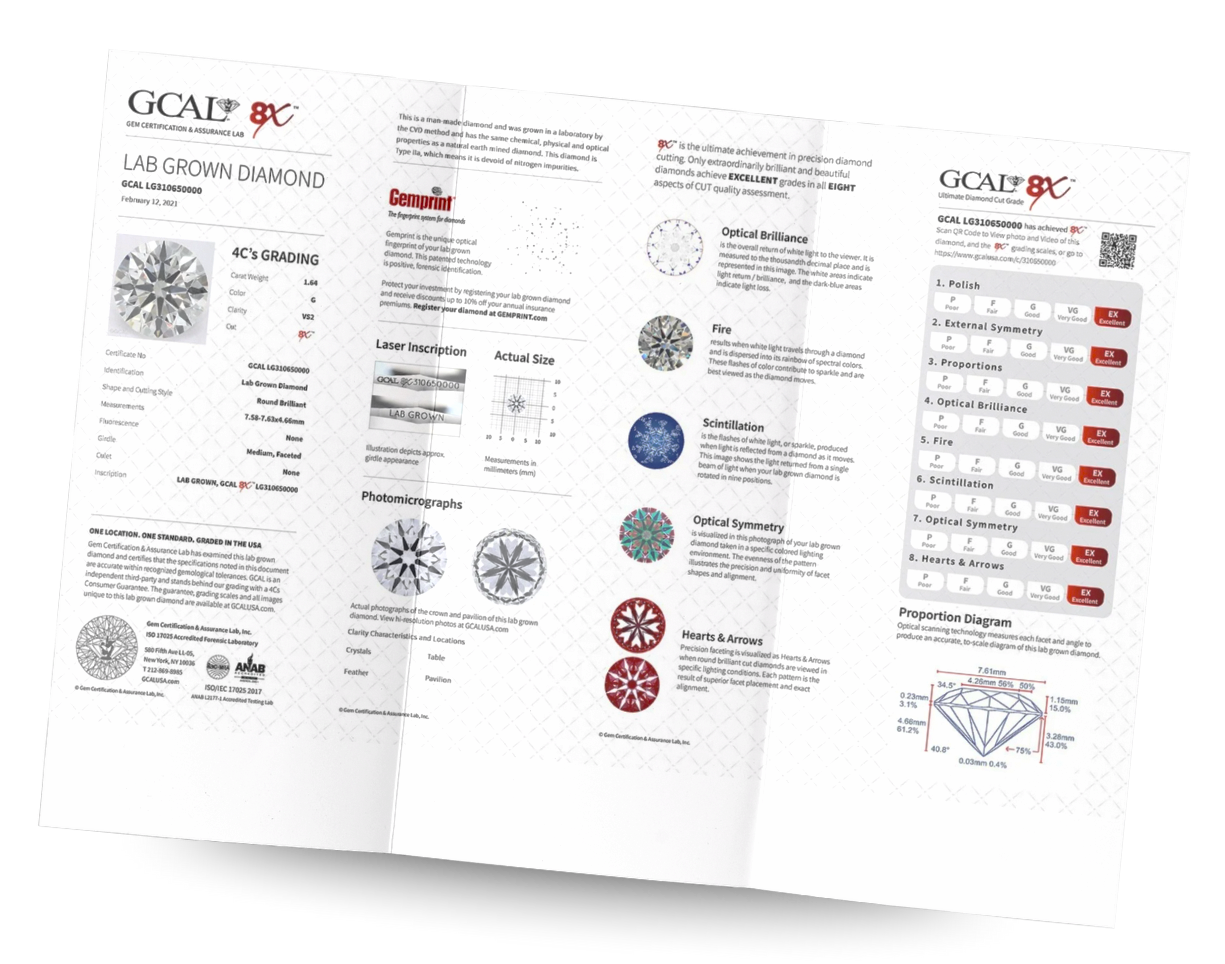
At Durham Rose, every Lab-grown diamond above .30ct is certified by either IGI or GCAL for authenticity, quality, and ethical sourcing. Evaluated by popular labs, each diamond comes with detailed information in a card form, reflecting our commitment to quality and transparency.
Diamond Details: The certificate provides specifics like shape, carat weight, dimensions, table percentage, and depth percentage, helping customers understand the diamond’s physical characteristics.
Diamond Grading: It includes grading attributes such as colour, clarity, cut, and fluorescence, offering insight into the diamond’s visual appearance and quality.
Diamond Identification: A unique identification number or barcode ensures traceability and allows customers to verify the diamond’s authenticity.
Diamond Origin: Specifies that the diamond is lab-grown, distinguishing it from natural diamonds and assuring ethical and sustainable production.
Certification Authority: Issued by reputable labs such as IGI, GIA, or EGL, lending credibility to the diamond’s quality and authenticity.
Additional Information: May include polish and symmetry grades, fluorescence intensity, and other comments about the diamond’s characteristics.
How much does it cost?
The cost of bespoke jewellery depends on the design, materials and gemstones you choose. We’ll work closely with you to create something that reflects your vision while staying within your budget, with clear and transparent pricing throughout the process. If you already have an idea in mind, get in touch for a tailored quote, or book a design session to start bringing your ideas to life.
Knowledge Hub
At Durham Rose, we believe in empowering our clients with the knowledge they need to feel confident throughout their bespoke journey. While our expert designers are always available to answer questions during consultations and throughout the process, we’ve also created a wealth of resources to help you understand every element of your jewellery and make informed decisions with confidence.
Jewellery Services
As a bespoke company, we offer a complete service that supports every stage, providing a seamless and personal experience designed entirely around you. From initial design through to creation and aftercare, every detail is thoughtfully considered to ensure your piece is crafted with complete care.
Explore Our Blog Posts
Curious about the world of bespoke jewellery? Discover the stories behind the process, gain insight into every stage of creating a unique piece, and find answers to your questions along the way. From designing the perfect engagement ring to understanding gemstones and precious metals, our blog is your go-to guide for all things bespoke jewellery
What exactly are lab-grown diamonds, and how do they differ from mined diamonds?
Lab-grown diamonds are real diamonds created in a controlled environment using advanced technology that replicates the natural process of diamond formation. These diamonds share the same chemical composition, physical properties, and brilliance as mined diamonds but are produced through ethical and sustainable methods, free from the environmental and social impacts of traditional diamond mining.
Are lab-grown diamonds real diamonds? How do they compare in terms of quality and durability?
Yes, lab-grown diamonds are indeed real diamonds. They possess the exact chemical structure and physical characteristics as their mined counterparts, including the same hardness, brilliance, and fire. Lab-grown diamonds are just as durable and offer exceptional quality, often with fewer inclusions and a more consistent appearance, thanks to the controlled creation process..