– Published by Durham Rose, February 1st, 2026
Choosing an engagement ring is often one of the most meaningful parts of planning a proposal. It is rarely just about selecting a piece of jewellery, but about finding a design that feels like it belongs to a relationship, a memory, and a shared future. With so many styles and interpretations available, the process can feel overwhelming at first. A helpful way to approach it is not by focusing on technical terminology, but by thinking in terms of design directions, the overall visual language and feeling of a ring, and what story it tells when it is worn every day.
At its core, engagement ring design tends to fall into a few broad directions, each with its own personality. Rather than being strict categories, these are more like creative styles that help guide the eye and make the selection process feel more intuitive.
One of the most recognisable design directions is “The Classics”. This style is defined by timeless engagement ring silhouettes that have remained consistently popular due to their balance, elegance and enduring appeal. Rather than focusing on decorative excess or experimental forms, this direction is centred around well established designs that feel familiar, refined and effortlessly wearable. Each style within this category is rooted in tradition, yet continues to feel relevant because of its simplicity of form and clarity of design.
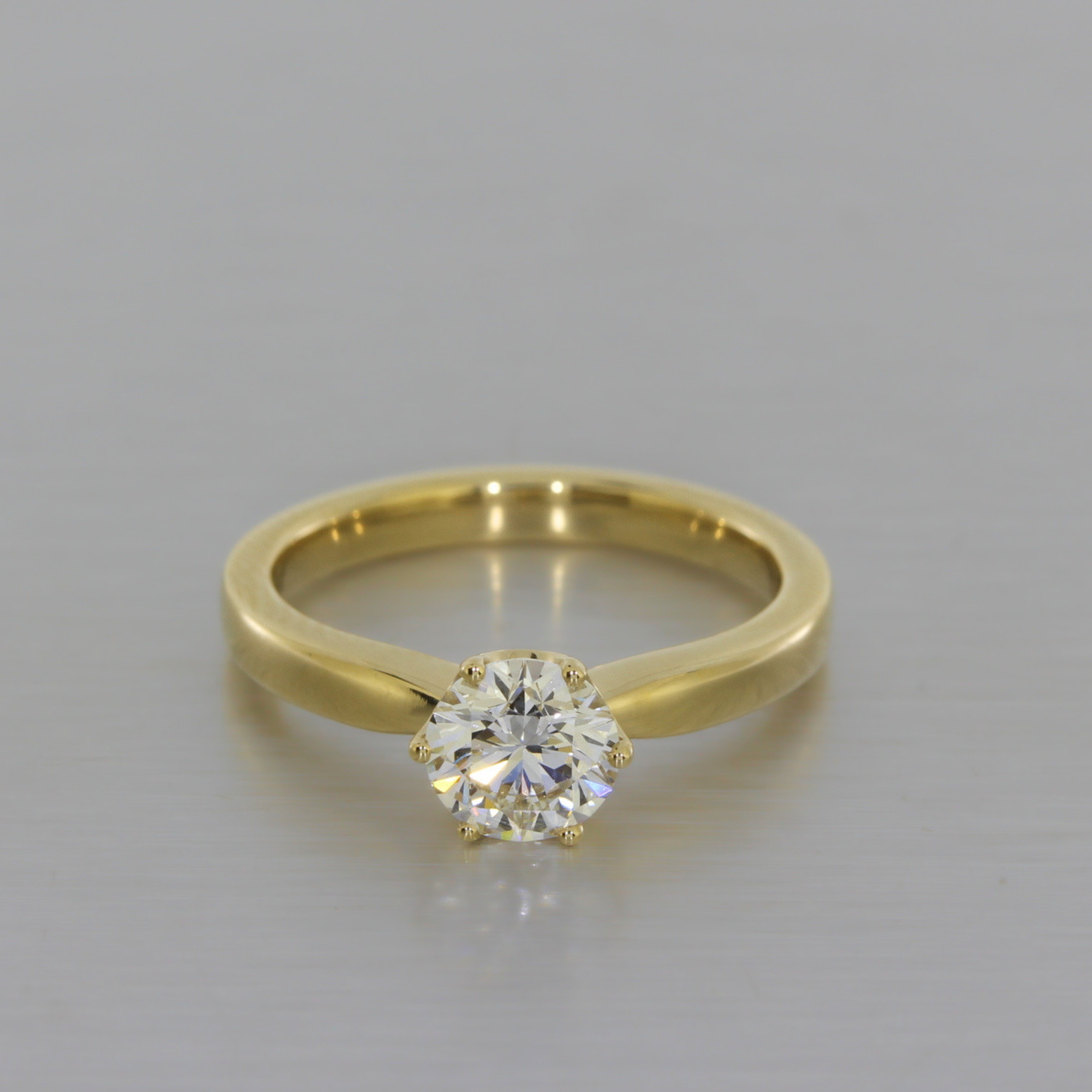
Within “The Classics”, there are several key styles that each offer a slightly different interpretation of traditional engagement ring design. The solitaire is the most iconic expression of this direction, featuring a single centre stone with no additional detailing. Its strength lies in its clarity, allowing the cut, shape and brilliance of the diamond to define the entire ring. It is a design that feels understated yet confident, relying entirely on proportion and craftsmanship.
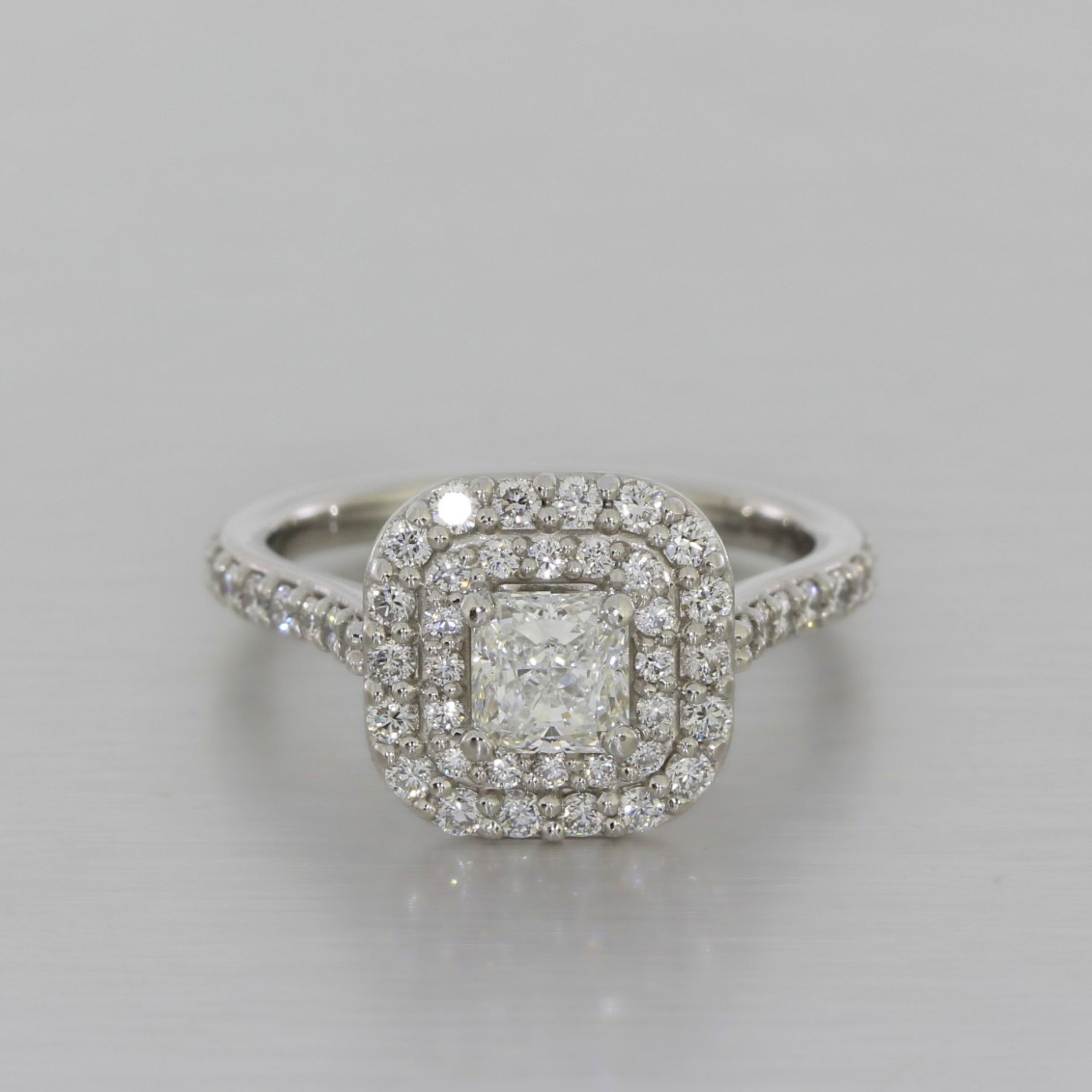
The halo design introduces a more decorative variation, where smaller surrounding diamonds frame the centre stone. This creates a soft halo of brilliance that enhances sparkle and adds depth, while still keeping the centre stone as the focal point. It feels traditional yet elevated, offering a more luminous interpretation of a classic engagement ring.
Another key style within this direction is the diamond shoulder design, where smaller accent diamonds are set along the shoulders of the ring. These stones create a gradual flow of light that naturally draws attention towards the centre stone. The result is a balanced and elegant design that adds subtle detail without taking away from the main focus.
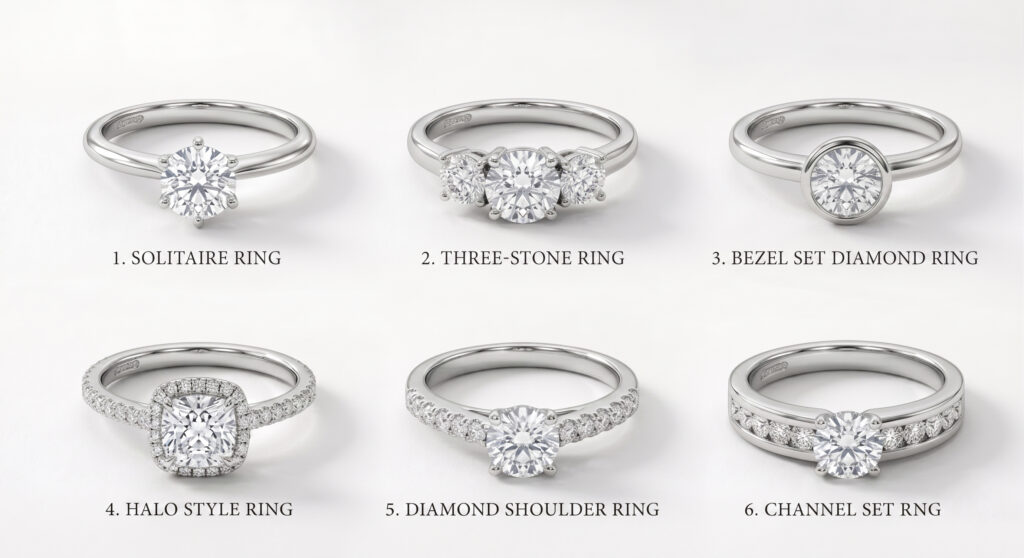
The three stone design is also a defining part of “The Classics”. Featuring a central diamond flanked by two side stones, it creates a sense of symmetry and meaning, often interpreted as representing the past, present and future. Visually, it offers a slightly wider and more balanced appearance, with each stone working together as part of a unified composition.
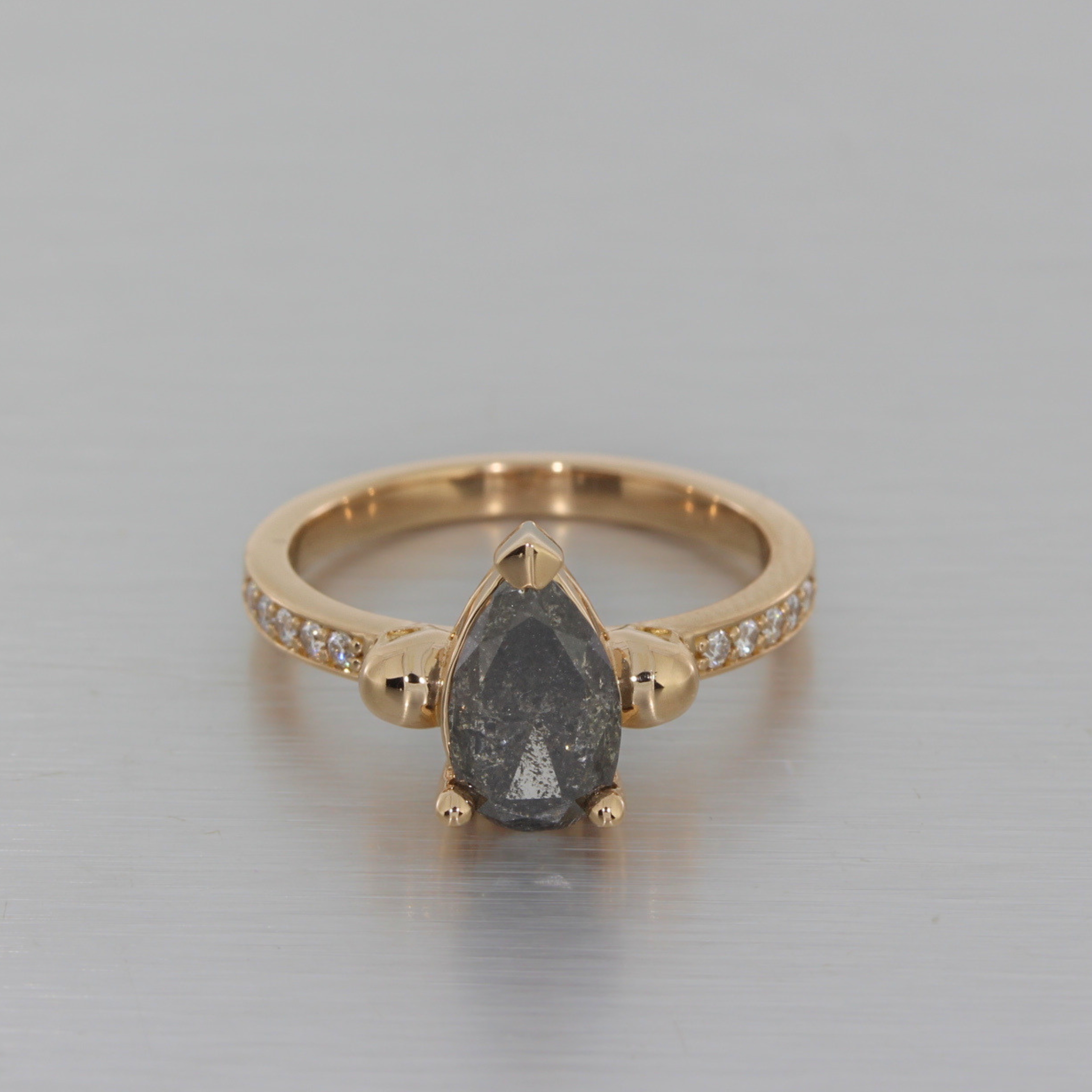
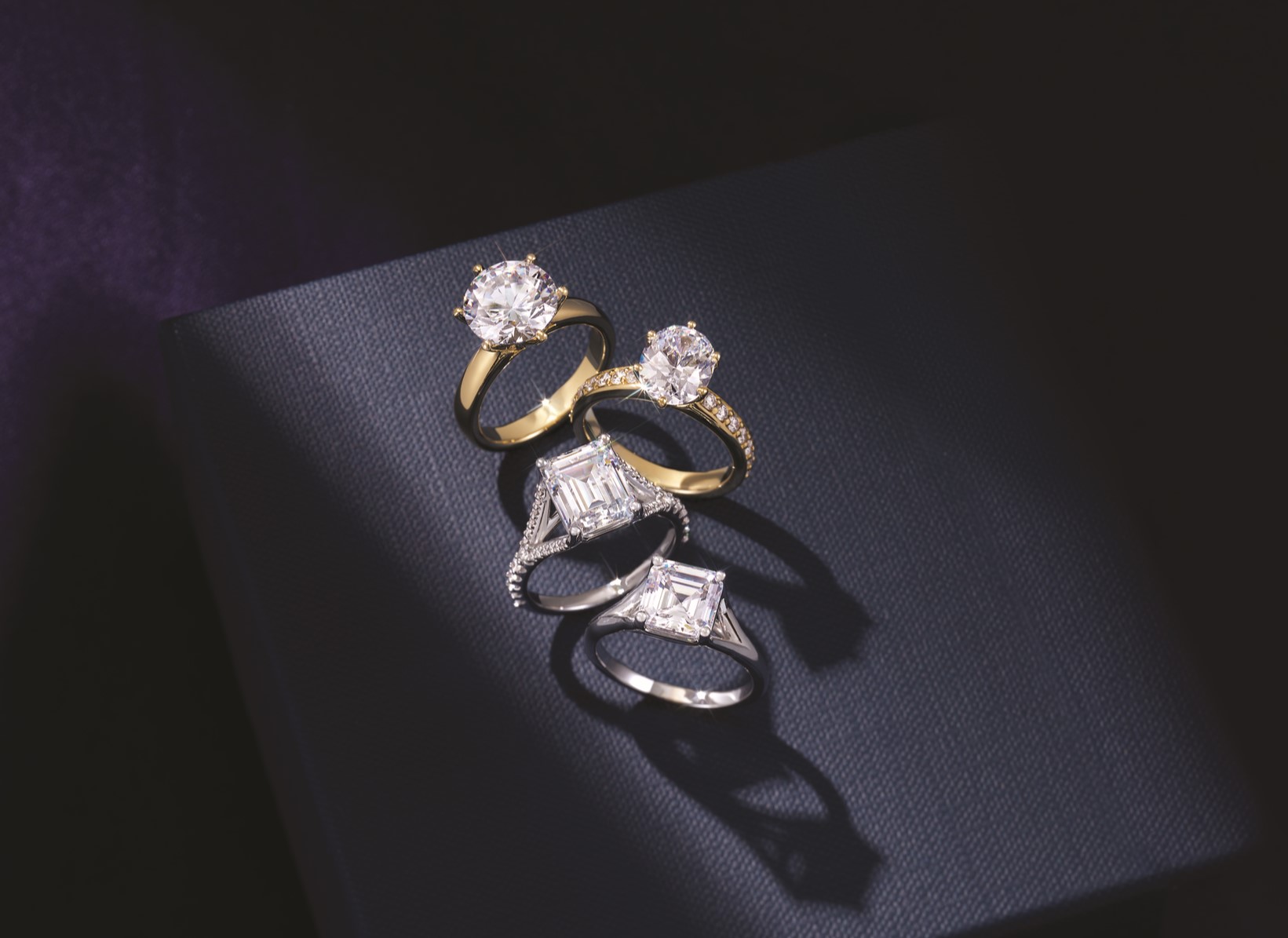
Across all styles within this direction, the shape of the centre stone plays an important role in defining the overall character of the ring. An oval shape creates a soft and elongated silhouette that feels elegant and fluid. A pear shape introduces a more distinctive outline, combining softness with a subtle point of individuality. An emerald cut feels more structured and architectural, with step-like facets that produce a calm and refined reflection of light. Even within traditional designs, these shape choices significantly influence the personality of the ring.
The Classics” represent enduring design principles that remain relevant across generations. Whether expressed through a solitaire, halo, diamond shoulder or three stone design, this direction is defined by balance, clarity and elegance. It is a style that continues to resonate because it feels familiar yet meaningful, offering a sense of permanence in a constantly evolving design landscape.
Moving away from simplicity, another design direction is vintage-inspired styling. This is where engagement rings begin to feel more decorative, detailed and expressive. Instead of quiet minimalism, this direction embraces texture, pattern and craftsmanship. It often feels like stepping into a different era, where jewellery was created with a strong emphasis on ornament and artistry.
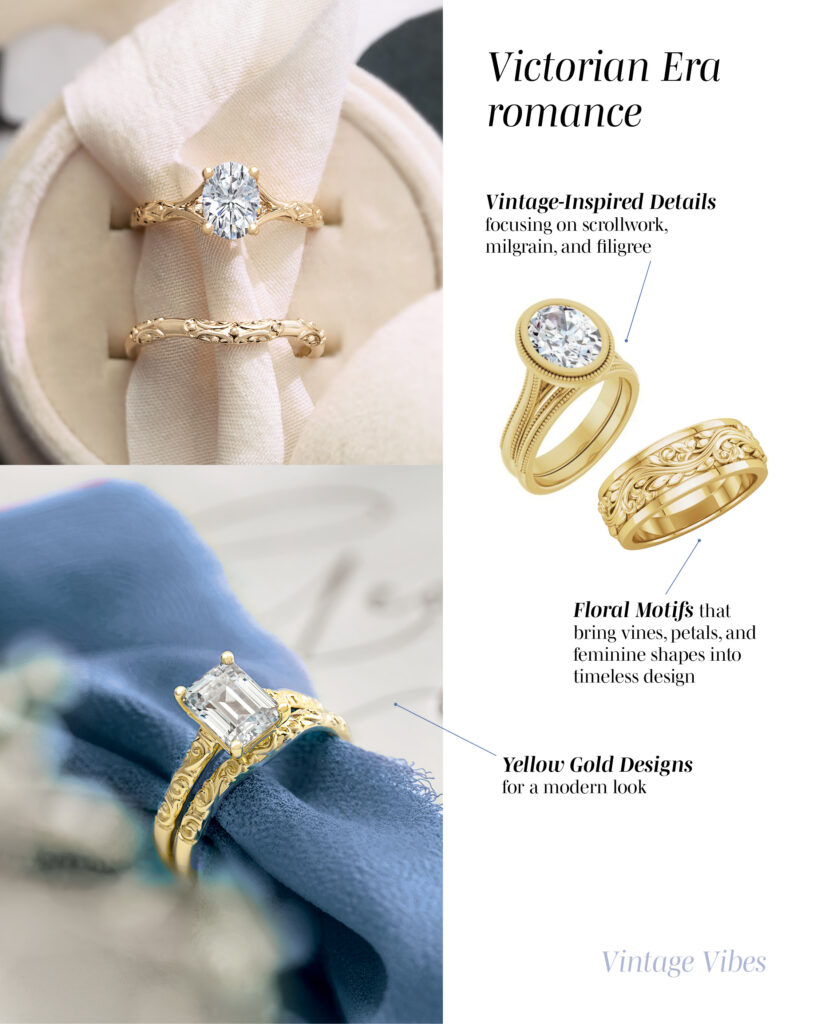
One of the most defining features of this style is the use of halo settings, where the centre stone is surrounded by smaller stones that enhance its presence and create a soft, luminous outline. This adds depth and dimension to the design, making the centre stone feel more prominent and visually rich. Alongside this, milgrain detailing is often used, which is a delicate beaded texture along the edges of the metal. Although subtle, it adds a sense of intricacy and craftsmanship that feels almost handcrafted in character.
These decorative elements work together to create a sense of richness and detail that sets vintage inspired designs apart, and this is where Art Deco influence becomes especially important. Within vintage inspired design, Art Deco stands out as one of the most distinctive visual languages. It is defined by structure, geometry and symmetry, often combining bold shapes with carefully balanced composition. The result is a ring that feels architectural and confident, with a strong visual identity that is both decorative and precise. There is a sense of order in these designs, yet also a richness that comes from their detail and form.
Ultimately, these rings appeal to those who value romance, heritage and craftsmanship, combining historical artistry with modern expectations of durability and ethical sourcing.
Another increasingly expressive direction is coloured Gemstone design. Instead of focusing solely on traditional diamond styling, this approach introduces colour as the central design element. The result is a ring that feels more personal and visually distinctive, often reflecting mood, meaning or identity rather than convention alone.
Each gemstone brings its own atmosphere. Sapphires often feel deep, classic and grounded. Emeralds carry a rich green tone that feels natural and expressive, almost organic in appearance. Champagne diamonds introduce a softer warmth, offering a subtle alternative that still feels refined but slightly more individual. In this design direction, colour is not just an accent but the foundation of the entire visual composition, shaping how the ring is perceived at first glance.
This direction also allows for more creative combinations of stones, where contrast and harmony are used to build a more layered design. One of the most popular expressions of this is the blending of coloured gemstones with traditional white diamonds. Rather than choosing one over the other, the two are often paired to create balance between brilliance and colour. Diamonds add brightness and structure, while coloured stones introduce depth and personality, resulting in a design that feels both refined and expressive.
A particularly distinctive interpretation of this idea is the toi et moi design, which features two stones set side by side. This style is often used to represent two individuals coming together, making it one of the most symbolic ring designs. The pairing does not need to follow symmetry or matching stones, which is part of its appeal. A diamond may be paired with a sapphire, or an emerald with a pear cut diamond, creating contrast in both shape and colour. The result is a design that feels deeply personal, visually dynamic and slightly unconventional compared to traditional single stone rings.
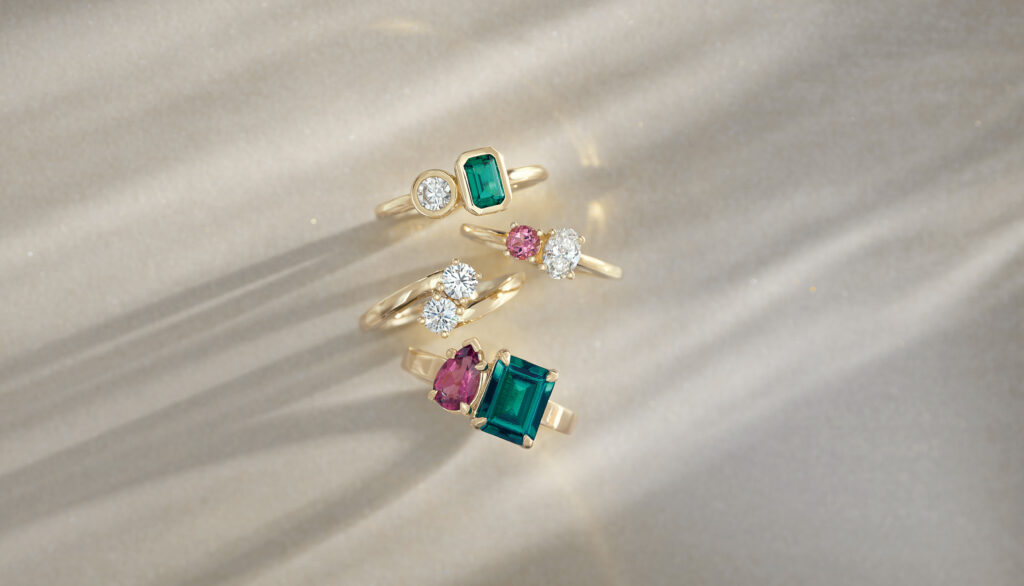
Beyond fixed pairings, this direction also embraces mixed stone arrangements more broadly, where different cuts, sizes and colours are combined within a single design. These combinations can feel structured and balanced or more fluid and organic, depending on the intention behind the piece. The use of contrast becomes a key design tool, allowing each stone to highlight the other while contributing to a cohesive overall look.
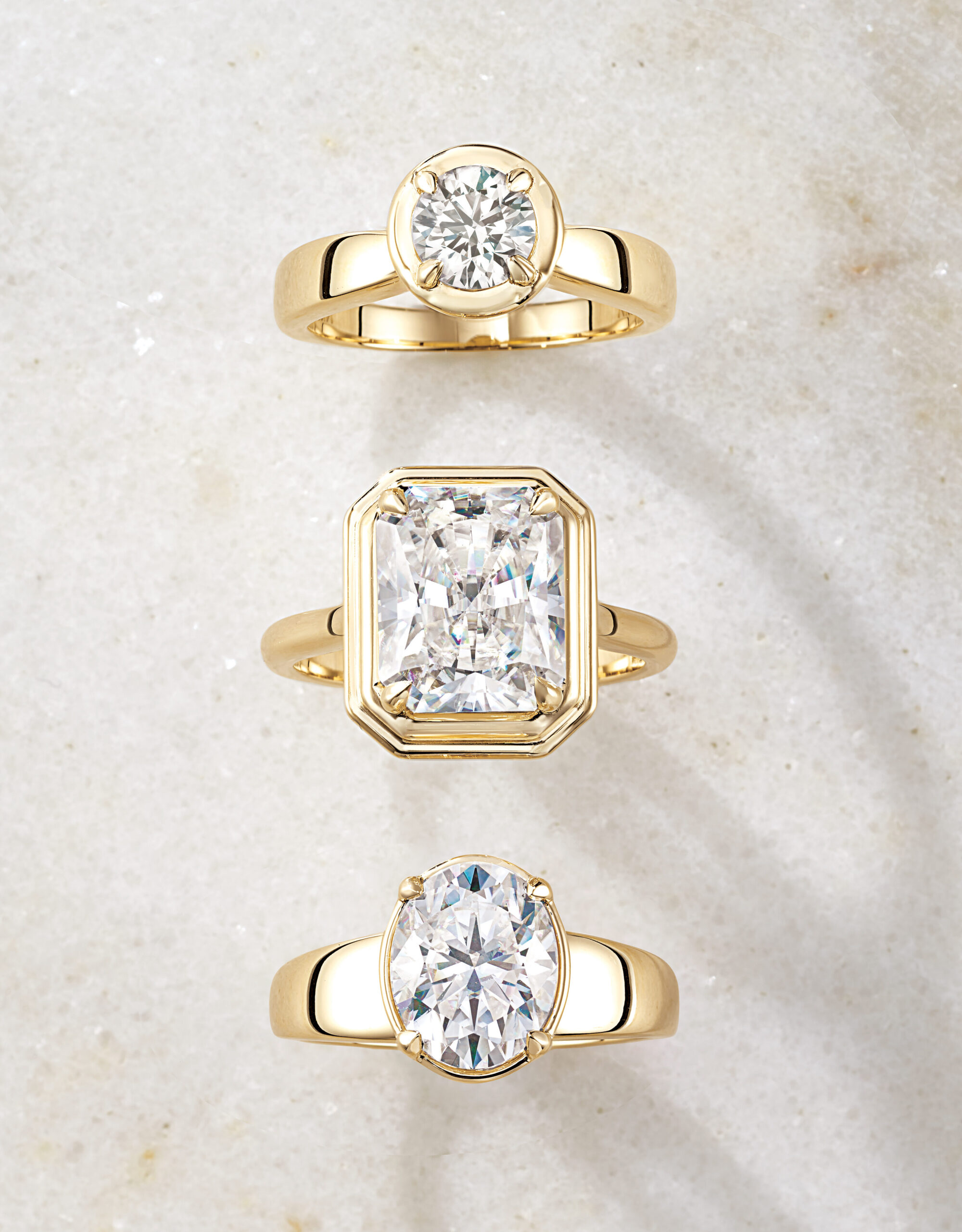
A more contemporary design direction is sculptural or modern statement design. This approach focuses on form, structure and composition, where the ring is treated almost like a piece of miniature architecture. Rather than relying on decorative detail or colour, it creates impact through shape, proportion and visual movement.
In sculptural designs, the setting often feels more integrated and directional, guiding the eye through the structure of the ring rather than focusing on a single static point. Even familiar stone shapes such as round or oval cuts take on a different personality when placed within more architectural settings. The surrounding structure changes how the stone is perceived, giving it a more contemporary and design-led identity.
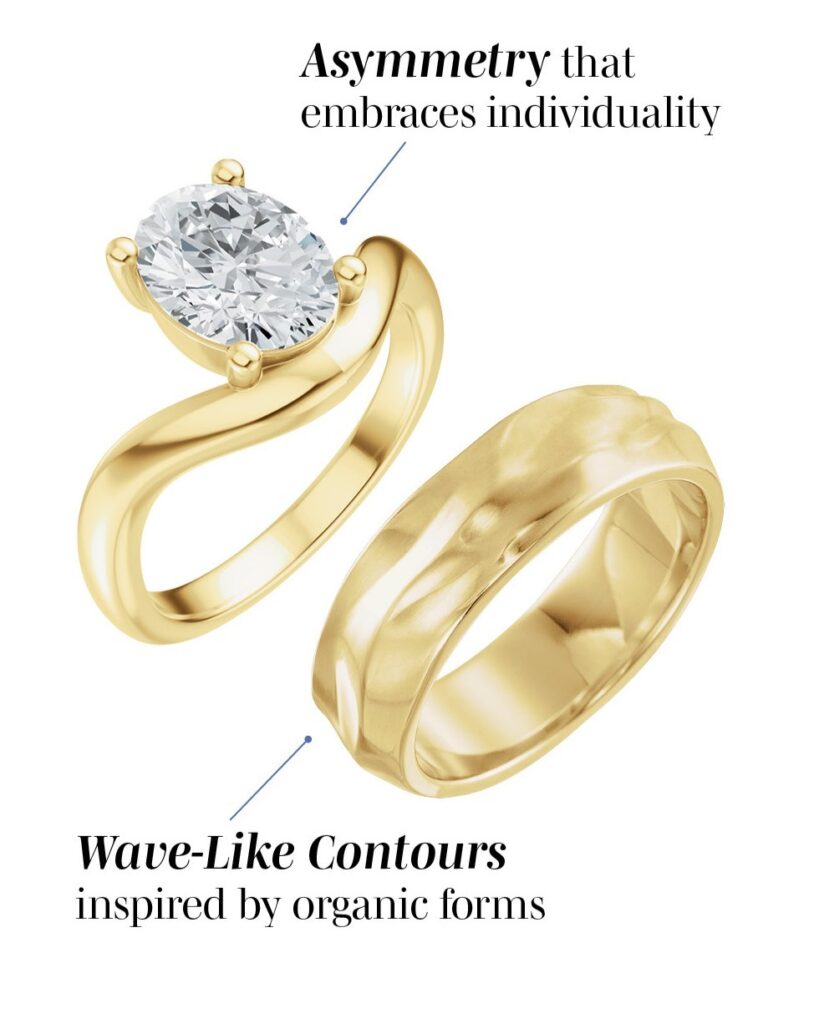
This direction often plays with contrast and geometry, creating designs that feel bold but controlled. Metal is used to emphasise structure rather than softness, with clean surfaces and strong visual lines contributing to the overall composition. The result is a ring that feels confident, modern and intentionally designed rather than traditionally decorative.
With all these design directions, what makes engagement ring design so personal is that these styles are not fixed rules, but starting points. Minimalist, vintage inspired, coloured gemstone and sculptural designs each offer a different visual language, but they are not meant to limit creativity. Instead, they provide a foundation that helps shape ideas and guide the overall direction of a ring.
Some of the most interesting designs come from blending elements across different styles, creating something that sits naturally between two visual approaches. A ring might combine the clean simplicity of a minimalist setting with a subtle vintage inspired detail, or pair the structured form of a sculptural design with the warmth and character of a coloured gemstone. In bespoke design especially, these boundaries become more fluid, allowing different influences to come together in a way that feels intentional and well balanced rather than confined to one category.
This flexibility means there is rarely a single correct direction to follow. Instead, it becomes a process of exploring what feels visually right, whether that is something understated, detailed, bold or expressive. The focus is not on how a ring is labelled, but on how it looks, feels and connects with personal taste.
In the end, the most meaningful engagement ring is the one that feels right to you. Design directions can guide and inspire the process, but the final choice always comes down to personal preference, emotion and the connection you have with the design itself.